
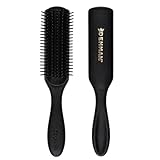

Our top pick is the Tangle Teezer Ultimate Detangler for curly hair, the wet detangler named more than any other in the 134 Reddit threads we read. But the honest first finding is that “best brush for curly hair” is three different questions: a brush to get knots out wet, a brush to shape curls wet, and a brush to run through dry curls on day two. Only the first two are jobs most of r/curlyhair will vouch for.
That split is the whole page. The most-upvoted piece of advice in the 134 threads we read was not a product at all. A parent asked for help with a six-year-old’s curls after a shop advisor rewrote her routine, and the reply that nearly matched the post’s own score said to stop brushing daily, let the curls clump, and only ever detangle sopping wet. The failure stories in our threads repeat one pattern, the wrong tool for the job: a definer expected to detangle, a boar brush forced through coils, a detangler expected to make ringlets. So the picks below are sorted by job, each one carries the complaint its own owners raise, and the seventh pick is a comb, because sometimes that is the right answer. I kept seeing the same “which brush” question answered with “which job,” so that is how we built this.
| Product | Price | Job | Teeth | Hair Types | Handle | Rating | Buy |
|---|---|---|---|---|---|---|---|
| Tangle Teezer Ultimate Detangler for Curly Hair (3C to 4C) Our pick | $$ Mid | Wet detangling (conditioner in) | Two-tier FlexPro, firm-flex | 3C to 4C (brand) | Yes | 4.6 (7,399 reviews) | Check price (Affiliate link) |
| Denman D3 7-Row Styling Brush | $$ Mid | Wet curl definition (brush styling) | — | — | — | 4.6 (80,117 reviews) | Check price (Affiliate link) |
| Bounce Curl Define EdgeLift Brush | $$ Mid | Wet curl definition (brush styling) | — | — | — | 4.5 (5,488 reviews) | Check price (Affiliate link) |
| Bounce Curl Volume EdgeLift Brush | $$ Mid | Wet curl definition, fine hair | — | — | — | 4.5 (3,086 reviews) | Check price (Affiliate link) |
| Felicia Leatherwood Detangler Brush | $$ Mid | Wet detangling, dense type 4 | — | Kinky, coily, curly, wavy (brand) | — | 4.5 (6,734 reviews) | Check price (Affiliate link) |
| FHI Heat UNbrush Detangling Brush | $ Budget | Wet or dry detangling | — | — | — | 4.5 (37,393 reviews) | Check price (Affiliate link) |
| Paul Mitchell Detangler Comb | $ Budget | Wet detangling and light definition | Wide, rounded | — | — | 4.7 (22,485 reviews) | Check price (Affiliate link) |
Swipe the table to compare specs and ratings. The Buy column stays pinned.
How we picked, and what we did not do
We researched and compared; we did not use these brushes. Every pick clears a floor of at least 1,000 Amazon ratings and a 4.0-star average, every “Buy” link is a labelled affiliate redirect, and no brush bought its place. Two picks ship on their rating record more than on named community praise, and each section says which.
The picks are ordered by job (detangling, then defining, then the comb), not by which to buy first; if you own nothing, start with the comb. The method was to read what curly, wavy and natural-hair posters do with a brush and what they complain about afterwards, across eight Reddit sweeps at comment depth, then group the tools by the job each one is good at. Health and damage claims are pinned to the American Academy of Dermatology, not to a thread. Where a brand’s own listing makes a claim we could not check (bristle counts, breakage percentages), we either attribute it to the brand or leave it out.
Do you need a brush at all? Three jobs, and only two have consensus behind them
Yes if you want knots out or curls clumped; probably not for a daily dry pass. Wet detangling and wet definition are the two jobs the community agrees a brush is for. A dry brush-through on day two is the one most curl types say ruins the pattern; a comb or your fingers does that job better.
The AAD’s guidance is the reason a comb comes first. Hair is delicate when wet, so the AAD says to detangle wet hair with a wide-tooth comb, ends first, working up. Curly hair is the exception that proves it: nobody in the threads we read brushes curls dry to detangle them, because a dry brush pulls a clump apart into frizz. They detangle in the shower, over conditioner, with a flexible brush or a comb, and they say the slip does more of the work than the tool. If your rinse-out conditioner does not give you slip, no brush on this page will feel gentle.
Definition is the second job, and it is a styling choice rather than a requirement. A ridged or pinned brush pulled through a soaking-wet, product-loaded section gathers the strands into one clump, which dries as a defined curl. Plenty of people get there with their fingers instead. One heavily upvoted side-by-side post asked the sub to choose between comb curls, finger curls and a Denman brush, and the set most commenters took to be the finger curls won by a mile on volume. That is not an argument against brushes. It is a reminder that a definition brush trades volume for definition, which we cover below.
The third job, the dry refresh, is where the community splits by curl type. Looser waves and healthy 3A curls sometimes brush dry on purpose for a soft, big look. Tighter patterns say a dry brush means “each strand would try to escape entrapment in individual directions,” in the words of the top reply on that thread. The dry job is covered in its own section near the end.
How to actually use a curl brush
Section the hair, get each section soaking wet, load it with leave-in or gel, then pull the brush through in one motion away from the head. Most “this brush did nothing for me” reports are technique, not the brush: hair that was damp instead of dripping, sections wider than the brush, or brushing straight down the back of the head.
The question nobody answers in the threads is the basic one. Under a post celebrating a first good hair day with a Denman, a commenter asked whether you brush straight down, upside down, or twist as you go, and the thread’s answers went to the routine, not the technique. Here is the answer the successful routines share. Work in sections small enough that the brush covers the whole width in one pass. Get the section wetter than feels reasonable: the most useful post we read was titled “Finally got my hair wet enough,” from someone who thought they were already styling on wet hair and only got definition once each section was soaked in the shower, and one commenter’s summary was “You can’t use too much water.” Put the product in before the brush, not after. Then hold the brush vertically and pull it through from the roots toward the ends in one smooth motion, letting the section wrap into a ribbon behind it, and either pin the section away or scrunch it once and leave it alone. At the crown, change the angle and brush the section up and away from the head, which is the fix people use for flat roots.
One more thing the threads agree on: the knots come out first, with a comb, fingers or a flexible detangler, and the definer shapes what is left. Trying to do both with one stiff brush is how the “I screamed from the pulling” stories start. If you buy exactly two tools, the pair the threads keep describing is a flexible detangler for the knots and a Denman or Bounce Curl for the clumps.
Expect more hair in the brush than you are used to. Curls hold shed hair in place until you detangle, so a once-a-week wash-day detangle releases a week of shedding at once; it looks alarming next to a daily brush without meaning more hair is lost. The thing to watch is not the clump in the bristles but strands snapping mid-length under force, which is the breakage the AAD’s habits list is about. A real rise in shedding, or anything happening at the scalp, is a question for a dermatologist, not a brush. And whichever tool you pick, flexible bristles bend and soft teeth wear; the most methodical reviewer in our threads built her repurchase decision on a detangler’s teeth bending after two years, so plan to replace, not to keep for a decade.
1. Tangle Teezer Ultimate Detangler (Curly): our top pick for getting knots out wet
Tangle Teezer Ultimate Detangler for Curly Hair (3C to 4C)
Best for: Wet detangling over conditioner on curls and coils, the one job the curly community agrees a brush is for
Firmer two-tier FlexPro teeth than the regular Ultimate Detangler, built for 3C to 4C hair
- The wet detangler named more than any other across our curly-hair threads, used in the shower with conditioner in
- Two-tier teeth: long teeth loosen knots while short teeth smooth the surface and clear shed hair
- Handled version of the palm brush, so wet hands keep their grip
- The teeth are short, so dense or long textured hair has to be worked in small sections; a 4B owner of the standard model could not clear the middle of a section even in eight sections
- Owners of the standard model report the flexible teeth start to bend after a couple of years and shed hair is hard to clear from between them; the curly model shares the geometry
- It is a detangler, not a definer; people who define with it describe it as a substitute for a styling brush
(Affiliate link) · price may vary
This is the brush for the job the whole community agrees on. The curly version of the Ultimate Detangler holds 4.6 stars across more than 7,000 Amazon ratings in the mid ($$) band, and its firmer two-tier teeth, made for 3C to 4C hair, do one thing: ease wet knots out over conditioner without the yank.
Why it is our top pick
Across our eight sweeps, a Tangle Teezer was the wet detangler named more than any other, in more than two-thirds of the threads in the detangling sweep alone. The pattern is the same every time: conditioner in, water running, small sections, brush from the ends up, then either rinse or move on to a definer. One poster whose routine ran to nearly two thousand upvotes put the two-tool logic plainly: a Tangle Teezer to detangle, then small sections defined with a Denman. Another, who quit styling brushes altogether and said her hair thanked her, kept the Tangle Teezer for detangling in the shower. That is the slot it owns, and this handled, firmer-toothed curly model is the right one for coils; the standard Ultimate Detangler that appears on our general hair brush roundup has softer teeth.
Where it falls short
The teeth are short. A high-density 4B owner who timed her wash day at three hours found the standard Ultimate Detangler could not clear the middle of a section even in eight sections, and after two years the flexible teeth had started to bend, with shed hair a nightmare to pick out from between them. That report is about the standard model, and the curly model’s firmer teeth are the brand’s answer to it, but the geometry is the same, so long or dense hair will still be sectioning small. It is also a detangler and nothing else: the people who define with it describe it as a stand-in for a styling brush, not a match for one.
Tangle Teezer · (Affiliate link)
2. Denman D3: the definer the community argues about
Denman D3 7-Row Styling Brush
Best for: The curl-definer: seven rows of round-ended pins that clump and shape curls and coils, usually over leave-in in the shower
Seven rows of round-ended nylon pins in an anti-static rubber pad for defining curls and smoothing
- The curly community's reference brush for turning separated strands into defined, clumped curls, usually worked through leave-in in the shower
- Rows of pins pull out, so the brush can be softened for looser or more fragile curl patterns
- Round-ended pins and an anti-static pad glide without the static a plastic paddle throws
- It defines by adding tension, which costs volume: flat roots and, on coily hair, more shrinkage are the recurring owner complaints
- It smooths and clumps but is not a gentle wet-detangler for knots; the knots come out first, with something else
- Aggressive with every row in: on some curl types it thins the clumps or adds frizz, which is why owners remove rows
(Affiliate link) · price may vary
If you want defined, clumped curls from a brush, this is still the reference, and it is also the pick with the loudest dissent. The Denman D3 holds 4.6 stars across more than 80,000 ratings, the deepest record on this page, in the mid ($$) band.
Seven rows of round-ended pins on a rubber pad gather a wet, product-loaded section into a ribbon as you pull through. The case for it is decades deep. A commenter whose mother was a hairdresser in the 1970s said her house has had Denmans in it for forty years and her daughters use them too, and the first-time posts read like conversions: ringlets on the first try, “what is this witchcraft.” The highest-scoring thread in our whole corpus, a routine with nearly twelve thousand upvotes, applies product with a D3 with three rows removed. That row-removal detail is not a hack, it is standard practice; the seven-row brush pulls hard, and people take out every other row to soften it. It also comes fully apart to wash, which the forty-year owner says she does with warm soapy water and a toothbrush (our brush-cleaning guide covers which brushes can soak and which cannot).
Now the other side, because it is just as real. The most common complaint is that definition costs volume: “very defined curls and less volume,” in the words of a 300-upvote comment, and flat roots that need their own workaround. On coily hair a highly upvoted r/Naturalhair poster said it felt like it made her shrinkage ten times worse, and the top reply agreed that more definition means more shrinkage. It is not a detangler; a 4B owner called it “an instant flop” that only went through her hair when heavily coated in product, and a thread titled “Never using a Denman brush ever again” carries an upvoted reply calling it terrible for most curl types and any wide-tooth comb a better tool. A minority cannot get it to work at any row count. And people break them. If your curls thrive on a lighter touch, a good diffuser and your hands may matter more than this brush.
Denman · (Affiliate link)
3. Bounce Curl Define EdgeLift: the definer people are switching to
Bounce Curl Define EdgeLift Brush
Best for: Brush-styling defined clumps on medium to dense curls, with a parting edge and a lift edge on the same tool
Ridged flexible bristles that gather a section into one clump as you pull through, plus an EdgeLift edge for root direction
- The brush the curly community has been switching to from the Denman since 2024, with routine posts that call the change life-changing
- Ridges clump a section as you pull; the fine black bristles smooth the surface, which owners say the dupes lack
- Comes apart to rinse, and the edge can part and lift roots without a second tool
- The standard ridges make clumps that fine-haired owners find too big; the Volume EdgeLift with smaller ridges is the fine-hair version
- It does not work for everyone: some owners report it pulls and tangles once gel is in, or dries their curls nearly straight, and the technique takes practice
- Mid-market ($$) money for a brush, and Reddit says so out loud
(Affiliate link) · price may vary
Reach for this if the Denman gave you stringy or over-tight clumps and you want a definer with a smoothing layer. The Define EdgeLift holds 4.5 stars across more than 5,000 ratings in the mid ($$) band; its ridged flexible teeth are backed by fine black bristles that smooth a section as the ridges clump it.
The edge doubles as a parting tool and a root-lift edge. “Premium” here means the top of this page’s price range, not a step up from its sibling: the Volume EdgeLift below costs the same and differs only in ridge size, which is a fit choice. Bounce Curl was one of our named search terms, so the raw hit count is partly ours. What is not ours is the shape of the mentions: routine posts from 2024 through this month name it, usually as a switch away from a Denman, in the same conversion tone the Denman got a few years earlier (“this was life changing for me”). One long-time brush-styler who had worked through a Denman, a boar brush, a boar-synthetic combo, a synthetic brush, a wide-tooth comb and her fingers said this was the first tool that did the boar-then-comb job in one pass, while volunteering that it is not for everyone, “because nothing is for everyone.” The dupe question comes up constantly and we answer it below; the short version is that the owners who bought both say the original’s fine bristles are the difference.
The downsides are specific. The standard ridges make clumps that fine-haired owners find too big, which is why the smaller-ridge version is the next pick. It fails for a real minority, and the failures are described in detail: one owner said it dried her curls nearly straight, another felt she was the only person the brush had done nothing for. The technique curve is steep, and at this price several posters said out loud that they could not justify another brush.
Bounce Curl · (Affiliate link)
4. Bounce Curl Volume EdgeLift: smaller ridges for fine hair and waves
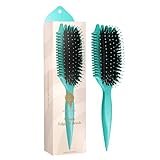
Bounce Curl Volume EdgeLift Brush
Best for: Fine or lower-density curls and waves that get clumps too big from a standard-ridge brush
Smaller ridges than the Define brush, so each pass makes narrower clumps and leaves more of them
- The smaller-ridge answer to the fine-hair complaint that standard define brushes make clumps too big
- Same parting and lift edges as the Define brush, so the crown can be brushed away from the head for root lift
- Named as the fine-hair pick by fine-haired owners in the thread that surfaced the ridge-size problem
- Smaller clumps mean less definition on medium and dense curls; this is the wrong ridge size for most 3B and up
- Same ($$) price as the Define brush, and one owner who bought both admits they are still sitting unused
- The thinnest review record among the brushes we compared, a little over half the Define brush's
(Affiliate link) · price may vary
Best if you have fine or lower-density curls and every definer you have tried made clumps too big. The Volume EdgeLift holds 4.5 stars across more than 3,000 ratings at the same mid ($$) price as the Define brush. The difference that matters is ridge size: smaller ridges make narrower clumps and leave more, which reads as volume.
It carries the thinnest review record on this page. The thread that put this on the page is a fine-haired poster who bought a Define-style knockoff, got great definition with clumps too big for her hair, then found a smaller-groove version and called the difference enormous. A highly upvoted reply from another fine-haired owner named this exact brush as the one she adores, and one fine-haired Denman user in the same thread said the same thing: way too big a clump. Another poster’s opening line was “I fear I slept on the bounce curl brush for way too long”; the one she bought was the volumizing model. If that is you, the ridge size is the variable to change before you change anything else.
Hold the counter-evidence in mind, because it comes from the same thread. A fine-haired owner of the Bounce Curl fine-hair model said that after trying every way she could think of, all it did was pull and tangle her hair once gel was in, and she lost her clumps. Smaller ridges also mean less definition on medium and dense curls, so on those the standard ridges are usually the better fit, and one owner who bought both admits they are still sitting unused.
Bounce Curl · (Affiliate link)
5. Felicia Leatherwood Detangler: for dense type 4 coils

Felicia Leatherwood Detangler Brush
Best for: Dense type-4 coils and kinky hair that a soft detangler cannot get through in one pass
Long, firm, flexible bristles on a pad bonded on three sides, so the head flexes with the hair instead of ripping through it
- Designed by a celebrity natural-hair stylist and used by curl specialists in salons, per r/Naturalhair reports
- Longer, firmer bristles than a Tangle Teezer, so it works larger sections of dense hair and clears shed hair faster
- Rigid bristles that owners say do not bend with age, unlike softer detanglers
- Firmer than a Tangle Teezer, so tender-headed and fine or fragile hair may find it less gentle
- The brand's own site sells out, so the Amazon listing is the reliable place to find it
- On very dense 4C hair it still does not solve wash-day detangling on its own; sectioning, slip and night braids do most of the work
(Affiliate link) · price may vary
For coily, kinky and dense hair a soft detangler cannot get through, this is the one r/Naturalhair keeps naming. The Felicia Leatherwood Detangler holds 4.5 stars across more than 6,700 ratings in the mid ($$) band. Its long, firm, flexible bristles sit on a pad bonded on three sides, so the head flexes with the hair rather than ripping through.
The best evidence for it is a salon story. A poster who always brings her own Tangle Teezer to appointments because stylists rip through her ends with a wide-tooth comb said she did not need it this time: the curl specialist had a Felicia Leatherwood, and it glided through. The most methodical owner comparison we found, from a high-density 4B poster who compared it against a Tangle Teezer and a Kazmaleje comb, ranked it faster than the Tangle Teezer, easier to clear shed hair from, and the one whose rigid bristles would not bend with age. A mother uses hers on her own 4C hair and her daughter’s 3B and threw out her Denman.
Three honest limits. It is firmer than a Tangle Teezer, so tender-headed, fine or fragile hair may find it less gentle; in that same comparison thread a self-described tender-headed commenter picked the Tangle Teezer and used the Leatherwood only for a second pass. The brand’s own site sells out, which is a live frustration in the threads, so the Amazon listing is the reliable place to find it. And on very dense 4C it is not a rescue tool: one poster with an hour-and-a-half wash-day detangle uses one and still cannot get through without pain. The most upvoted reply told her to braid the hair into four to eight sections at night, and another to detangle only on wash day with a lot of conditioner, which is about routine, not a brush.
Brush With The Best · (Affiliate link)
6. FHI Heat UNbrush: the everyday detangler with the quiet following

FHI Heat UNbrush Detangling Brush
Best for: An everyday wet-or-dry detangler for curls at budget money, with one of the deepest review records of any detangler we compared
105 two-length DuoFlex bristles on a vented, open-back cushion (brand spec), so the head flexes and water drains
- Came up unprompted in four separate curly and natural-hair threads, more organic mentions than several brushes we searched for by name
- Long bristles detangle while short ones smooth, and the vented back means it drains instead of sitting wet in the shower
- Very light in the hand (the brand lists it at about an ounce and a half), easy to hold through a long detangle
- Soft, flexible bristles are the type experienced detangler owners say wear out fastest; treat it as a brush to replace, not to keep for a decade
- It detangles, it does not define; there are no ridges to clump curls
- Amazon lists it under several near-identical ASINs at different prices; we link the one with the shared review record
(Affiliate link) · price may vary
An everyday wet-or-dry detangler at budget ($) money with a huge record: 4.5 stars across more than 37,000 ratings, second only to the Denman on this page. The brand says 105 bristles in two lengths sit on a vented, open-back cushion, so the head flexes and water drains instead of pooling.
We did not go looking for this one. It came up on its own in four separate curly and natural-hair threads, always as “the UnBrush” (“get an Unbrush,” “detangle with an unbrush before rinsing the conditioner out,” “a solid purchase for me”), which is more unprompted mention than several brushes we searched for by name. The brand identification is ours; nobody on Reddit called it an FHI. Four positive mentions is thin, so it earns its slot on that record plus the rating depth, and we say so.
Because the forum signal is all positive, the downsides here come from the category and the listing rather than from owner complaints we found. Soft, flexible bristles are the type the most experienced detangler reviewer in our corpus says wear out fastest, so treat it as a brush to replace, not to keep for a decade. It detangles and does not define; there are no ridges to clump curls. And Amazon lists it under several near-identical entries at different prices; we link the one that carries the shared review record.
FHI Heat · (Affiliate link)
7. Paul Mitchell Detangler Comb: the honest first tool
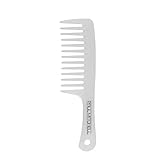
Paul Mitchell Detangler Comb
Best for: The honest first tool for wet detangling and light clumping, and the one the AAD would hand you before any brush
Wide, smooth, rounded teeth on a salon-standard comb that costs less than a coffee
- A wide-tooth comb is the AAD's recommended tool for wet hair, and a sizeable slice of r/curlyhair styles with nothing else
- A 4.7-star average across a 22,000-plus review record, at budget money
- Works soaking wet in the shower and doubles as a product-distribution tool
- It will not clump curls the way a ridged brush does; people who want brush-defined ringlets find a comb leaves them looser
- On dense 4C hair a wide-tooth comb can fail outright, and pulling it through with force is exactly how hair breaks
- It is a plain plastic comb; any well-made wide-tooth comb does this job, and this one earns its slot on the review record, not on anything clever
(Affiliate link) · price may vary
Buy this before you buy any brush. A wide-tooth comb is what the AAD recommends for wet hair, and a sizeable slice of r/curlyhair styles with nothing else. The Paul Mitchell Detangler Comb holds 4.7 stars, the highest rating on this page, across more than 22,000 ratings, for budget ($) money.
Be clear about the evidence, because it is category evidence, not brand evidence. Nobody in our 134 threads recommended this comb by name; they recommended a wide-tooth comb, over and over. A post with more than three thousand upvotes was just someone who combed wet, scrunched, went to bed and woke up to the best hair they had ever had, and the top reply was the same routine in one line. In the anti-Denman thread, an upvoted commenter said any wide-tooth comb beats a Denman for curly hair and that theirs cost four dollars a decade ago; another called the comb the “goldilocks styling tool.” One poster uses the Tangle Teezer wide-tooth comb in a vertical motion “like my Denman brush,” and others name a Conair comb or a Kazmaleje paddle comb; the brand is not the point. This Paul Mitchell earns the slot on the rating record and the price; any well-made wide-tooth comb does the same job.
It will not clump curls the way a ridged brush does, so people chasing brush-defined ringlets find a comb leaves them looser. And on very dense 4C a wide-tooth comb can fail outright; one poster could only get hers through by pulling with all her strength, which the AAD lists among the habits that break hair. If the comb needs force, the answer is more slip and smaller sections, not a stiffer tool.
Paul Mitchell · (Affiliate link)
Definition costs volume, and three fixes people use
A definition brush trades volume and apparent length for definition, and no brush escapes that. The three fixes the community uses are to brush the crown up and away from the head, to weight sections with clips while they dry, and to break up the clumps with a little oil once the hair is fully dry.
This is the most consistent complaint about brush styling, and it is physics rather than a product flaw: pulling strands into one clump makes a heavier, smoother curl that hangs closer to the head, and on coily hair a tighter, shorter one. The 300-upvote comparison put it as “raking gives messier curls, which means more volume.” The fixes are practical. For the crown, brush the top sections up and away from the scalp; a Bounce Curl owner with a 2,700-upvote post said changing the angle you brush the top section is all it takes. For length on coils, one poster sections the hair after brushing and clips duck-bill clips to the ends to weight them while the style sets. For overall volume, wait until the hair is completely dry, then separate the clumps with a drop of oil on your fingers. And if you want volume above everything, the honest answer is the winning photo in that side-by-side thread, which most commenters took to be the finger curls, no brush.
Which Denman, and how many rows to pull
Buy the D3 unless you have a specific reason not to, and expect to remove rows. The D3 is the seven-row original the community means by “Denman.” The D4 has nine rows instead of seven; the D38 puts Denman pins on a paddle, and one experienced user prefers it for detangling rather than defining.
We want to be careful here, because Reddit is not. Across eight sweeps there was almost no side-by-side discussion of Denman models; the D4 appears once in a routine (“style with Denman D4, detangle when necessary”) and the D38 once, from a commenter who prefers to let curls clump on their own but keeps a D38 for detangling. Treat that split as one person’s framing, not a consensus. What the corpus does show is how people use the D3: with rows removed. “Three rows removed” and “even rows removed” are how the two routines that specify a row count describe theirs, one of them the highest-scoring post in our whole corpus. Pulling rows spreads the pins and softens the tension, which is the fix for a brush that thins your clumps or pulls too hard on finer patterns. Start with every other row out and add rows back if you want more definition.
Is the dupe as good as the original?
Often good enough, sometimes not, and the owners who have used both are the ones to listen to. Bounce Curl and Denman knockoffs work for many people in our threads. Those who bought the original after a dupe say the difference is the fine smoothing bristles on the Bounce Curl, and for the Denman, the pins and the pad.
The dupe question is two questions. On performance, the most useful comment came from someone who bought the knockoff first, found it “good” but had to add a comb-smoothing step, then caved and bought the real Bounce Curl and called it a huge improvement because of the little black bristles. Against that, some of the best hair days in our corpus were built on dupes: a three-hour wash-day routine with more than 3,500 upvotes used “a knock off bounce curl brush,” and a 2,400-upvote routine used a dupe and a Tangle Teezer. For the Denman, an upvoted commenter noted the drugstore imitations “achieve the same result,” and one of the highest-scoring posts in our sibling brush research built a best-hair-day routine on a knock-off Denman from Walmart and a four-dollar paddle brush.
The second question is about who designed the thing. The most upvoted comment on the fine-hair groove thread, at more than 800 points, asked people to buy from the person who created the Bounce Curl brush, because she has been trying to trademark her own design while copies flood the listings. One poster even 3D-printed a hybrid of a Tangle Teezer body and Bounce Curl ridges for herself and refused to share the files, because distributing them “would cross a line.” We link the originals here. If money decides it, a dupe will probably get you most of the way, and you will know within a week whether the smoothing bristles were the part you needed.
Can you brush curls dry?
Comb dry if you must, brush dry only if you plan to re-wet and restyle, and expect the answer to depend on your curl type. Looser waves and healthy 3A curls sometimes brush dry on purpose for a soft, voluminous look. Tighter patterns say a dry brush turns a clump into frizz that takes a wash to recover.
The thread that started with “I love to dry brush my curls” is the clearest map of the divide. The poster, with looser curls, brushes dry for a soft look and uses a boar-bristle brush on days two and three. The top reply, with more than 800 upvotes, was that if she tried it her strands “would try to escape entrapment in individual directions” and take a week to find their curl buddies again; another reply was just “laughs in 3B.” The nuanced middle came from a commenter who dry-combs happily but dry-brushes only when she intends to spray the hair down, reapply product and re-diffuse. A separate post titled “Dry brushing isn’t always a bad thing” made the same point from the other side: a deliberate, occasional big-hair look, not a daily habit. If a boar brush is part of your dry routine, our general hair brush roundup covers what boar bristles do and do not do, and how to clean and replace any brush; the short version for curls is that boar does nothing for tight patterns, and forcing one through coils is how the “I screamed from the pulling” stories start. For most curl types, the daily job is water and a refresh routine, not a brush.
Type 4 coils and kids’ curls: where a brush stops being the answer
On dense 4C hair, and on a child who cries at wash day, no brush on this page fixes the problem on its own. The tool matters less than slip, sections, night braids and doing it only on wash day. Buy the gentlest detangler you can (our curly-hair detangler roundup ranks the products) and change the routine around it.
We read the whole 351-comment thread from the parent whose six-year-old’s curls were a mess after a shop assistant told her to wet the hair less, brush it differently, and switch to a boar brush and comb. The sub’s answer was near unanimous and it was not a product: detangle with fingers or a wide-tooth comb on wash day while the conditioner is in, do not brush on the days between, and let the curls clump. The dissent, from a commenter who does brush wet and finds it fine, was that anyone telling you never to brush is overselling it. Both are compatible with the picks here, which is the point: a soft detangler over conditioner on wash day, and hands the rest of the week. For dense adult 4C, the poster who cannot get any tool through her hair without pain was told, in the most upvoted reply, to braid it into four to eight sections every night so it cannot tangle in the first place, and to detangle only on wash day with plenty of slip. That is the honest ceiling of what a brush can do, and a page that does not say it is selling you a brush.