


Our top pick is Paul Mitchell Shampoo Two. It strips product residue, silicones, and oil in a single wash, backed by over 14,000 reviews at 4.6 stars, at a mid-range ($$) price. But the right clarifying shampoo depends on what you are removing. If your problem is hard-water minerals rather than product gunk, a chelating formula like the Malibu C pick below handles what a regular clarifier misses.
That distinction kept surfacing across r/HaircareScience, r/curlyhair, and r/finehair: people try clarifying shampoo, it helps with product residue, but their hair stays dull or coated because the real culprit is mineral buildup from hard water. Most big-media “best clarifying shampoo” lists blur these two problems into one. They are not the same, and the fix is not the same. So we compared the formulas people actually reach for, read through the community evidence on what each one removes, and looked for the honest tradeoffs. Every downside below comes from buyers, not us.
| Product | Price | Size | Key Ingredients | Sulfates | Color-Safe | Rating | Buy |
|---|---|---|---|---|---|---|---|
| Paul Mitchell Shampoo Two Clarifying Shampoo Our pick | $$ Mid | 16.9 fl oz | Sodium lauryl sulfate, wheat-derived conditioners | Yes (SLS) | No (may accelerate color fade) | 4.6 (14,519 reviews) | Check price (Affiliate link) |
| Suave Essentials Daily Clarifying Shampoo, 30 oz | $ Budget | 30 fl oz | Deep cleansers, pH-balanced surfactants | Yes | Not specifically marketed as color-safe | 4.7 (764 reviews) | Check price (Affiliate link) |
| Malibu C Hard Water Wellness Shampoo (33.8 oz) | $$$ Premium | 33.8 fl oz | Provitamin B5, citric acid, flax protein, chelating agents | No | Yes | 4.4 (6,875 reviews) | Check price (Affiliate link) |
| Kristin Ess Deep Clean Clarifying Shampoo | $ Budget | 10 fl oz | Sulfate-free surfactants, mineral-removing agents | No | Yes | 4.5 (3,330 reviews) | Check price (Affiliate link) |
| Olaplex No. 4C Bond Maintenance Clarifying Shampoo | $$$ Premium | 8.5 fl oz | Bis-aminopropyl diglycol dimaleate (Olaplex bond builder), broad-spectrum clarifying agents | No (SLS/SLES-free) | Yes | 4.7 (3,134 reviews) | Check price (Affiliate link) |
| OUAI Detox Shampoo | $$$ Premium | 10 fl oz | Apple cider vinegar, chelating agents, keratin | No | Yes | 4.6 (6,997 reviews) | Check price (Affiliate link) |
Swipe the table to compare specs and ratings. The Buy column stays pinned.
1. Paul Mitchell Shampoo Two: our top pick
Paul Mitchell Shampoo Two Clarifying Shampoo
Best for: Anyone who wants a single shampoo that handles both daily oil and periodic heavy buildup
Deep-cleaning surfactant formula that strips product residue, silicones, and oil in one wash
- Removes product residue, silicones, and oil in a single wash without needing a double-lather
- Salon-staple formula that has been consistent for years while competitors reformulate
- Works as both a daily shampoo and a periodic deep-clean reset
- Contains sodium lauryl sulfate, which can irritate sensitive scalps or accelerate color fade
- Strong clean-feeling finish that some describe as squeaky; follow with conditioner
- At roughly $1.24 per ounce, noticeably pricier than drugstore clarifiers
(Affiliate link) · price may vary
A salon-staple deep cleanser that removes product residue, silicones, and oil in one wash. If you need one shampoo that handles both daily oil control and periodic heavy-buildup resets, this is it.
Why we recommend it
Shampoo Two is the “big gun” that the community reaches for when a regular shampoo is not cutting through heavy buildup, and it has stayed consistent for years while competitors reformulate constantly. A single lather cuts through silicone coatings and styling-product residue that gentler shampoos leave behind, which is why it doubles as both a daily shampoo and a periodic reset. The formula uses SLS as the primary surfactant, so it is effective at degreasing, not just marketing itself as clarifying.
Key features
- Deep-cleaning surfactant formula that strips product residue, silicones, and excess oil in one wash.
- Doubles as a daily shampoo and a periodic clarifying reset.
- 16.9-ounce bottle at a mid-range ($$) price.
Who it’s best for
Reach for this if your regular shampoo has gradually stopped working and you want one bottle that handles both the reset and your daily wash, especially if you tolerate sulfates.
Potential downsides
- Contains sodium lauryl sulfate. If your scalp is sensitive to sulfates, the Kristin Ess pick below is a gentler path.
- The clean leaves hair feeling squeaky; follow with conditioner.
- At roughly $1.24 per ounce, it costs more than drugstore clarifiers.
Paul Mitchell · (Affiliate link)
2. Suave Daily Clarifying: the budget workhorse
Suave Essentials Daily Clarifying Shampoo, 30 oz
Best for: Fine-hair users who want a gentle, pH-balanced daily or weekly clarifier at a drugstore price
pH-balanced and hypoallergenic formula that removes buildup without over-stripping
- pH-balanced and hypoallergenic; gentle enough for frequent use on fine or sensitive hair
- Removes residue and buildup without the stripping aftermath common in stronger clarifiers
- One of the lowest-cost clarifying shampoos available, widely stocked at drugstores
- This 30-ounce Amazon listing is pricier than the compact single bottle most Reddit users reference from drugstores
- Not designed for hard-water mineral removal; a chelating formula handles that better
- The scent is light but generic; may not satisfy people who care about fragrance
(Affiliate link) · price may vary
The cult-favorite budget clarifier on r/finehair. A pH-balanced, hypoallergenic formula that removes residue without the over-stripping that sends people running from stronger options, at a fraction of the cost.
Why we recommend it
This shampoo has a dedicated appreciation post on r/finehair where one commenter calls it “the fine hair holy grail,” and the praise is consistent: it removes buildup gently, doesn’t over-strip, and costs around $3 at most drugstores. The Amazon listing here is a 30-ounce bottle at a higher price than the in-store single; if you can find it at your local Target, CVS, or Walmart, it is even cheaper. The listing we link carries 4.7 stars from over 700 ratings, a smaller review base than the other picks here because Amazon splits this shampoo’s ratings across several listings of the same product.
Who it’s best for
Fine-hair users who clarify regularly and want something gentle enough that it will not leave their hair feeling like straw afterward. Also a good starter for anyone trying clarifying shampoo for the first time.
Potential downsides
- This 30-ounce Amazon listing runs more than the $3 drugstore single bottle most Reddit users love.
- Not formulated for hard-water mineral removal; a chelating shampoo handles that.
- The scent is light and generic.
Suave · (Affiliate link)
3. Malibu C Hard Water Wellness: the chelating specialist
Malibu C Hard Water Wellness Shampoo (33.8 oz)
Best for: Anyone in a hard-water area whose hair has gone dull, lost curl definition, or feels coated despite regular washing
Chelating formula with provitamin B5 and citric acid that removes mineral deposits regular clarifying shampoos leave behind
- Chelating formula removes calcium, magnesium, iron, and copper deposits that regular clarifying shampoos miss
- Sulfate-free and color-safe; does not strip dye the way SLS-based clarifiers can
- Pairs with Malibu C Hard Water Wellness Remedy packets for intensive mineral removal
- A big bottle up front: the 33.8 oz is the size in stock (the 9 oz went unavailable in October 2026). Per ounce it is one of the cheaper chelators we list, but it is a lot of shampoo for a product most people use once or twice a month
- Designed for mineral buildup specifically; less effective than a surfactant clarifier for heavy product residue
- The orange-creamsicle scent is polarizing; some users find it too sweet
(Affiliate link) · price may vary
If your hair went dull, lost curl definition, or started feeling coated after you moved to a new area, the problem is probably mineral buildup from hard water, and a regular clarifying shampoo will not fix it. This one is designed for exactly that. If hard water is the primary concern, our full hard water shampoo guide covers five chelating and mineral-removing options.
Why we recommend it
Most clarifying shampoos use surfactants to strip product residue and oil. They do not touch the calcium, magnesium, iron, and copper deposits that hard water leaves on hair. This is a chelating formula: its chelating agents bind to those minerals and rinse them away. Multiple r/curlyhair threads document clear before-and-after improvements after switching to Malibu C, and the community distinguishes it from standard clarifying for exactly this reason. It is sulfate-free and color-safe, so it does the heavy lifting without the stripping.
Key features
- Chelating agents remove hard-water mineral deposits that regular surfactant clarifiers miss.
- Sulfate-free and color-safe formula with provitamin B5, citric acid, and flax protein.
- Pairs with Malibu C Hard Water Wellness Remedy packets for intensive mineral removal.
Who it’s best for
Households with hard water: white spots on the fixtures, hair that changed after a move. Pair it with a shower filter for ongoing prevention: the filter reduces new deposits, and the shampoo removes existing ones.
Potential downsides
- The size in stock is the 33.8-ounce bottle at around $40 (roughly $1.20 per ounce): low per wash, but a lot of shampoo up front for a product you use once or twice a month; a 3.4-ounce travel size also exists.
- Better at mineral removal than at cutting through heavy product residue; for thick silicone layers, pair it with a surfactant clarifier.
- The orange-creamsicle scent is polarizing.
Malibu C · (Affiliate link)
4. Kristin Ess Deep Clean: best sulfate-free clarifier

Kristin Ess Deep Clean Clarifying Shampoo
Best for: Anyone who avoids sulfates but still wants a deep clean that removes silicones and mineral deposits
Sulfate-free formula that removes silicones, mineral deposits, and excess oil without stripping moisture
- Sulfate-free, paraben-free, phthalate-free, and silicone-free while still lathering well
- Removes mineral deposits from hard water, which many sulfate-free shampoos struggle with
- Works across hair types including thick, curly, and color-treated
- Designed more as a weekly reset shampoo than a daily driver; daily use may over-strip some hair types
- The 10-ounce bottle goes quickly if used more than once or twice a week
- Fragrance is noticeable and may not suit people who prefer unscented formulas
(Affiliate link) · price may vary
A sulfate-free formula that still manages to strip silicones, mineral deposits, and excess oil. R/finehair users call it a “fan favorite clarifying shampoo,” and it works across hair types including thick, curly, and color-treated.
Why we recommend it
Sulfate-free clarifying shampoos usually trade cleansing power for gentleness. This one holds onto real cleaning ability: it removes silicone buildup and hard-water mineral deposits, two problems that many sulfate-free formulas leave untouched. If you live in a hard-water area and your sulfate-free shampoo gradually “stops working,” that is mineral buildup, and this shampoo handles it. We also featured it in our best shampoos for oily hair roundup for its deep-cleaning ability, but here the framing is different: use it as a weekly or biweekly reset between gentler washes.
Who it’s best for
Best if you avoid sulfates but still need periodic deep-cleaning power. Use it once or twice a week as a reset, with a gentler daily shampoo in between.
Potential downsides
- The community treats it as a weekly reset, not a daily driver. Daily use may strip too much from some hair types.
- The 10-ounce bottle goes quickly if used more than once a week.
- Noticeable fragrance that will not suit anyone who prefers unscented products.
Kristin Ess · (Affiliate link)
5. Olaplex No. 4C: best for curly hair

Olaplex No. 4C Bond Maintenance Clarifying Shampoo
Best for: Curly, coily, or chemically treated hair that needs buildup removal without losing curl definition or bond integrity
Broad-spectrum clarifying system with Olaplex bond-building technology that repairs while it cleans
- Removes chlorine, heavy metals, hard-water minerals, oil, and product buildup in one wash
- Bond-building technology repairs everyday damage while clarifying, so hair feels stronger after use
- Sulfate-free and safe for color-treated, curly, coily, and chemically processed hair
- At 8.5 ounces, a premium price for a small bottle
- Authorized-seller concerns on Amazon: some buyers report receiving older or suspect stock from third-party sellers
- The 8.5-ounce bottle is small; weekly use empties it in roughly two months
(Affiliate link) · price may vary
Curly routines layer leave-ins, creams, and gels, wash less often, and avoid sulfates. All of that accelerates buildup. But standard clarifying shampoos strip curl definition along with the residue. This one clarifies while repairing bonds.
Why we recommend it
The No. 4C uses a broad-spectrum clarifying system to remove chlorine, heavy metals, hard-water minerals, oil, and product buildup, while the Olaplex bond-building technology (bis-aminopropyl diglycol dimaleate) patches damaged bonds during the wash. For curly and coily hair, that combination matters: you get the reset without the frizzy, undefined aftermath that cheaper clarifiers leave behind. It is SLS/SLES-free and safe for color-treated and chemically processed hair.
Potential downsides
- At around $25 for 8.5 ounces (roughly $3 per ounce), it sits in the upper range of this lineup, though the OUAI comes in at a higher per-ounce cost.
- Some Amazon buyers report receiving older or suspect stock from third-party sellers; confirm the seller before purchasing.
- The small bottle empties in roughly two months of weekly use.
Olaplex · (Affiliate link)
6. OUAI Detox: best for color-treated hair
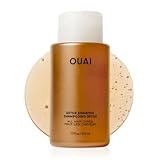
OUAI Detox Shampoo
Best for: Color-treated hair that needs periodic clarifying without accelerating fade
Apple cider vinegar plus chelating agents remove product and mineral buildup while preserving color
- Apple cider vinegar exfoliates buildup while chelating agents remove hard-water minerals and chlorine
- Sulfate-free and color-safe; designed to clarify without pulling dye
- Keratin in the formula helps smooth and strengthen hair after the clarifying strip
- At $34 for 10 ounces, it is a premium-tier price for a shampoo used once every week or two
- The ACV scent is noticeable during use, though it rinses out
- For heavy product buildup (thick silicone layers), it may need a double wash to fully cut through
(Affiliate link) · price may vary
The color-treated clarifying dilemma: you need to remove buildup, but aggressive clarifiers pull dye. This formula threads the needle with apple cider vinegar and chelating agents that clear residue and minerals without sulfated surfactants.
Why we recommend it
Apple cider vinegar rinses are a popular DIY clarifying method, but the results are inconsistent and the smell lingers (multiple Reddit users report vinegar scent re-emerging in sweat). OUAI’s formula puts the ACV into a proper shampoo format, adds chelating agents for mineral removal and keratin for post-clarifying strength, and skips sulfates. That makes it a two-in-one for color-treated users: it clarifies product buildup and removes hard-water deposits without the color-stripping risk of SLS-based options.
Potential downsides
- At $34 for 10 ounces, it is premium-tier for a shampoo you use once or twice a week.
- The ACV scent is noticeable during use, though it rinses out.
- For heavy silicone layers, it may need a double wash to fully cut through.
OUAI · (Affiliate link)
Clarifying vs chelating: what you actually need
Clarifying shampoos use surfactants to strip product residue; chelating shampoos use chelating agents to remove hard-water mineral deposits. They solve different problems and you may need both.
Surfactant-based clarifying shampoos (like the Paul Mitchell and Suave picks here) use strong detergents to strip product residue, silicones, oils, and dry-shampoo starch. If your hair feels coated, your regular shampoo has gradually “stopped working,” or you layer styling products, this is what you need. The American Academy of Dermatology warns that dry shampoo can accumulate on the scalp and hair, and specifically notes that homemade dry-shampoo powders that clump can clog pores and leave the scalp itchy, burning, or tender. If you use a dry shampoo between washes, periodic clarifying clears the accumulated starch before it reaches that point.
Chelating shampoos (like the Malibu C pick) use chelating agents to bind and remove mineral deposits from hard water: calcium, magnesium, iron, copper. Surfactant clarifiers do not touch these. If your hair changed after moving to a new area, your water leaves white spots on fixtures, or your color fades unusually fast, you probably need chelating rather than (or in addition to) standard clarifying.
How to tell which you need: if your shampoo gradually stops working over weeks, that is product buildup. If your hair texture changed after a move or a plumbing change, that is mineral buildup. If both sound familiar, use a surfactant clarifier for the product residue and a chelating formula for the minerals, at different intervals.
How often to clarify (without overdoing it)
Clarifying is a reset, not a daily routine. Use it too often and you strip the natural oils and protective coatings your hair needs.
Fine or straight hair with minimal product use: once a month may be enough. Your daily shampoo handles most of the load; the clarifier catches what creeps through.
Oily scalps using a daily shampoo: once every one to two weeks. Oil control is your daily shampoo’s job; the clarifier handles the residue that accumulates underneath.
Curly or coily hair with heavy product routines: every two to four weeks. Curly routines use more leave-ins, creams, and gels, all of which build up faster when you wash less often. But over-clarifying strips curl definition, so err on the less-frequent side, run a gentle daily curl shampoo in between, and follow every clarifying wash with a deep conditioner or mask.
Hard-water areas: monthly chelating wash on top of your normal clarifying schedule. A shower filter reduces ongoing mineral exposure; the chelating shampoo removes what the filter misses.
The AAD’s hair-care guidance recommends washing based on how dirty or oily your hair gets. The same principle applies to clarifying: watch your hair, not the calendar.
How to clarify without over-stripping
The biggest clarifying complaint on Reddit is not that the shampoo did not work; it is that it worked too well and left hair dry, frizzy, or straw-like. A few technique adjustments prevent that.
Apply to the scalp and roots, not the full length. Buildup accumulates at the scalp. Lather at the roots and let the rinse carry suds through the lengths; scrubbing the ends strips moisture from hair that does not need degreasing.
Always follow with conditioner. Clarifying removes protective coatings along with buildup. A rinse-out conditioner is the minimum; curly or dry hair benefits from a deep-conditioning mask after every clarifying wash. Skipping this step is the main reason people report “straw-like” results.
Start with a gentler option. If you have never clarified before or your hair runs fine or dry, start with the Suave or Kristin Ess pick rather than the Paul Mitchell. Gentler sulfate-free formulas let you gauge how your hair responds before moving to a stronger surfactant.
A note on Neutrogena Anti-Residue: it is arguably the most-discussed clarifying shampoo on Reddit, and the community is split down the middle. Some users call it effective and affordable; curly and fine-hair users often report it leaves hair feeling like straw. We did not include it in the lineup because that polarization makes it hard to recommend broadly, but if your hair tolerates strong surfactants, it is cheap and widely available. If it has stripped your hair before, the Suave pick above is a gentler budget path. Suave’s own Amazon listing is also titled “Anti Residue”, but that is the Suave formula, not the Neutrogena one.
Will clarifying shampoo strip my color?
Clarifying can accelerate color fade, but it depends on the formula and how often you use it.
Sulfate-based clarifiers (Paul Mitchell Shampoo Two, Suave) are the most aggressive at color removal because SLS lifts the cuticle to clean, which lets dye molecules escape. If you have color-treated hair and use one of these, limit it to once a month at most and follow immediately with a color-depositing or deep conditioner.
Sulfate-free clarifiers (Kristin Ess, OUAI, Olaplex No. 4C) are formulated to preserve color while still removing buildup. They clean with gentler surfactants, chelating agents, or ACV, so color loss is slower. These are safer for every-two-weeks use on color-treated hair.
The honest answer: any shampoo that removes buildup will take some color with it, because buildup and dye sit in the same layer. The difference is degree. If you clarify gently, less often, and condition well afterward, the fade is minimal. Timing a clarifying wash before a dye job is a different question with its own rules; our guide on whether to wash your hair before dyeing it covers when a deep clean helps color take and when to skip it. The same principle works in reverse for blondes who tone with a purple shampoo: over weeks, the deposited violet pigment accumulates and dulls the cool tone you were chasing, and a periodic clarifying wash resets the base before the next toning cycle.
Want to know how we choose? See about The Hair Roundup, or browse the rest of our hair-care roundups.