

Flakes on your shoulders do not automatically mean dandruff. They can also mean a dry scalp, product buildup, or even hard water, and the four look nearly identical while needing completely different fixes. That mismatch is why so many people buy a dandruff shampoo, see no change, and decide nothing works. True dandruff sits on the same spectrum as seborrheic dermatitis, which the American Academy of Dermatology ties to an overgrowth of yeast on the scalp. It responds well to medicated shampoos, but only when you match the active ingredient to what is actually going on up there.
That is how this guide is organized: by active, not by brand. Our top pick for most people is Nizoral Anti-Dandruff Shampoo ($$, 4.6 stars, over 110,000 Amazon ratings), the only over-the-counter shampoo built around 1% ketoconazole, the antifungal active people reach for once drugstore formulas stop keeping up. If ketoconazole is more than you need, the five picks that follow cover gentler and more specialized options, each with the kind of scalp it suits.
| Product | Price | Active Ingredient | Size | Format | Use Frequency | Rating | Buy |
|---|---|---|---|---|---|---|---|
| Nizoral Anti-Dandruff Shampoo Our pick | $$ Mid | Ketoconazole 1% | 7 fl oz | Liquid shampoo | Twice a week (every 3-4 days) for up to 8 weeks | 4.6 (110,793 reviews) | Check price (Affiliate link) |
| Head & Shoulders Classic Clean Anti-Dandruff Shampoo | $ Budget | Pyrithione Zinc 1% | 28.2 fl oz | Liquid shampoo | Daily / regular routine | 4.8 (1,252 reviews) | Check price (Affiliate link) |
| Selsun Blue Medicated Anti-Dandruff Shampoo | $ Budget | Selenium Sulfide 1% | 11 fl oz | Liquid shampoo | At least twice a week | 4.7 (24,910 reviews) | Check price (Affiliate link) |
| Neutrogena T/Sal Therapeutic Shampoo | $ Budget | Salicylic Acid 3% | 4.5 fl oz | Liquid shampoo | At least twice a week | 4.5 (20,019 reviews) | Check price (Affiliate link) |
| Head & Shoulders BARE Soothing Hydration Anti-Dandruff Shampoo | $ Budget | Pyrithione Zinc 1% | 13.5 fl oz | Liquid shampoo | — | 4.5 (4,435 reviews) | Check price (Affiliate link) |
| True+Real Coal Tar Therapeutic Plus Anti-Dandruff Shampoo | $ Budget | Coal Tar 0.5% (2.5% solubilized coal tar extract) | 16 fl oz | Gel shampoo | At least twice a week, or as directed by a doctor | 4.6 (3,627 reviews) | Check price (Affiliate link) |
Swipe the table to compare specs and ratings. The Buy column stays pinned.
Is it actually dandruff? Dandruff vs dry scalp vs buildup
Short answer: dandruff flakes tend to be larger, oilier, and yellow-tinged with an itchy scalp; dry-scalp flakes are small, white, and powdery; product buildup feels like a film or grit you can sometimes scrape off. They are not the same problem, and a medicated dandruff shampoo only helps the first one.
This was the single most common confusion in the Reddit threads we read across r/HaircareScience and r/SeborrheicDermatitis. People with a dry, tight scalp were reaching for a strong antifungal shampoo that dried them out further, while people with genuine dandruff were switching to gentle sulfate-free shampoos and watching the flaking come back. Two clues help you sort it out: dandruff usually comes with itch and an oily scalp, and it improves with a medicated active rather than with more moisture.
A few quick boundaries so you land on the right page:
- If your scalp is oily and greasy more than flaky, the fix is a wash routine, not an antifungal. Start with our best shampoo for oily hair picks.
- If your hair feels coated or heavy from styling products, that is buildup, and a clarifying shampoo is the tool.
- If your hair changed after a move and your fixtures have white scale, suspect minerals and read our hard water shampoo guide.
- If the flakes are yellowish and greasy with an itchy, sometimes red scalp, that is the dandruff and seborrheic-dermatitis lane, and the picks below are for you.
If your scalp is painful, weeping, or the patches are thick and spreading past the hairline, that is worth a dermatologist visit rather than a shopping decision.
Match the active to the cause
Short answer: ketoconazole and the other dandruff actives are over-the-counter drugs, and each one targets the problem a little differently. Ketoconazole and selenium sulfide are the heavy hitters for fungal flaking, pyrithione zinc is the everyday workhorse, salicylic acid clears scale and buildup, and coal tar is for stubborn, seborrheic-dermatitis-grade flaking.
Five of the six shampoos here are built on actives from the FDA’s OTC monograph for dandruff products (21 CFR Part 358, Subpart H): pyrithione zinc, selenium sulfide, salicylic acid, and coal tar. Ketoconazole, the active in our top pick, is also sold over the counter, but it was approved through a separate FDA pathway rather than the monograph. The distinction matters in two practical ways. First, monograph actives and their strengths are standardized, so a 1% pyrithione zinc shampoo is doing the same core job whatever the brand on the bottle. Second, all of these shampoos, monograph or not, are regulated as OTC drugs and are limited to controlling and relieving the flaking and itching of dandruff. None of them cure it, and any product promising a permanent cure is overstating what the chemistry does.
Here is what each active is best at:
- Ketoconazole (1%): the strongest over-the-counter antifungal for dandruff, and the one to try when zinc or selenium shampoos have stopped working. Used twice a week.
- Pyrithione zinc (around 1% to 2% in marketed shampoos): the most common active, found in most drugstore dandruff shampoos. Gentle enough for regular use and a sensible first try for mild to moderate flaking. Because it is the default active, two of our picks below use it: an everyday formula and a gentler sulfate-free one for sensitive scalps.
- Selenium sulfide (1%): a maximum-strength option for tougher, itchier flaking, with a cooling finish; it can be drying and can discolor light or treated hair.
- Salicylic acid (3%): not an antifungal at all. It is a keratolytic that dissolves and lifts thick scale and buildup, so it suits flaking that comes with crusty patches more than the classic oily-yeast kind.
- Coal tar (0.5% to 5%): the old-school heavy hitter for persistent seborrheic-dermatitis flaking (our budget pick uses 0.5%). Effective but strong-smelling, and it increases sun sensitivity.
The practical move, and the one the AAD recommends, is to pick an active, give it a few weeks, and if one shampoo does not work, switch to a shampoo with a different active rather than buying three of the same kind. A note on the gentler, “natural” lane: tea tree, apple cider vinegar, and scalp scrubs are cosmetics, not medicated drugs, so they can soothe a dry, flaky scalp but are not a substitute for an OTC active when you have real dandruff.
1. Nizoral Anti-Dandruff Shampoo: our top pick
Nizoral Anti-Dandruff Shampoo
Best for: Anyone whose flaking hasn't responded to drugstore zinc or selenium shampoos and wants the strongest over-the-counter antifungal active
1% ketoconazole, the only OTC antifungal dandruff active, used just twice a week
- The only over-the-counter dandruff shampoo with 1% ketoconazole, an antifungal active
- Over 110,000 Amazon ratings at a 4.6-star average, the most-reviewed pick in our lineup
- Labeled safe for color-treated, chemically processed, and gray hair, and used just twice a week
- Can leave hair dry or straw-like unless you follow with conditioner on the mid-lengths and ends
- Costs more per ounce than drugstore zinc or selenium shampoos
- Controls dandruff symptoms rather than curing them; flaking can return if you stop using it
(Affiliate link) · price may vary
When someone on r/HaircareScience posts that they have tried everything and the flakes keep coming back, Nizoral is the name that surfaces most often in the replies. It is the only over-the-counter shampoo with 1% ketoconazole, an antifungal active, and that potency is the reason it works for people whom pyrithione zinc and selenium have failed. Its Drug Facts label is clear about the routine: use it every three to four days for up to eight weeks, which is far less often than a regular shampoo.
It is not a no-brainer for everyone, mainly because it is drying. The most repeated tip in the threads, and the one we would pass on, is to follow it with a conditioner on your mid-lengths and ends (not the scalp) so your hair does not end up feeling like straw. It also costs more per ounce than the drugstore options below, at around $16 for a 7-ounce bottle. The upside is that you use it so infrequently that one bottle lasts months, and it is labeled safe for color-treated, chemically processed, and gray hair.
One thing to keep your expectations honest: ketoconazole controls dandruff, it does not cure it. Stop using it and the flaking can return, which is normal for a chronic scalp condition rather than a sign the product failed.
2. Head & Shoulders Classic Clean: best for daily use
Head & Shoulders Classic Clean Anti-Dandruff Shampoo
Best for: Everyday flake control for people who want a widely available, color-safe shampoo they can use as their regular wash
1% pyrithione zinc in a large, pH-balanced bottle made for daily use
- 1% pyrithione zinc, the most common OTC dandruff active, in a big-value 28.2 oz bottle
- pH-balanced and labeled color-safe, so it works as an everyday shampoo, not just a treatment
- Among the cheapest per ounce in our lineup at roughly $0.44 per fluid ounce
- Contains sulfates (SLS and SLES) and dimethicone that some sensitive scalps find drying or build-up-prone
- The fragrance is noticeable and can linger, a drawback if you are scent-sensitive
- Mild cases clear well, but some users report it doesn't fully resolve heavier flaking
(Affiliate link) · price may vary
If your flaking is mild to moderate and you want one shampoo you can use as your regular wash, the pyrithione zinc workhorse is the sensible starting point. Head & Shoulders Classic Clean is the most accessible version: a big 28-ounce bottle for around $12, pH-balanced, labeled color-safe, and gentle enough to use daily rather than as a twice-weekly treatment. For a lot of people with everyday dandruff, this alone keeps it in check.
The trade-offs are the ones the haircare-science crowd complains about. The formula contains sulfates (both SLS and SLES) and dimethicone, a silicone, which some people with sensitive or dry scalps find stripping or build-up-prone over time. The fragrance is noticeable and tends to linger. And while it clears mild cases well, heavier or more stubborn flaking often needs a stronger active like the ketoconazole or selenium picks. If classic Head & Shoulders feels too harsh on your scalp, the BARE version further down is the gentler answer.
3. Selsun Blue Medicated: best value

Selsun Blue Medicated Anti-Dandruff Shampoo
Best for: Stubborn flaking, itch, and scalp odor when a pyrithione zinc shampoo hasn't been enough
1% selenium sulfide with cooling menthol; free of SLS, silicones, and parabens
- 1% selenium sulfide, a maximum-strength OTC active for tougher flaking and itch
- Nearly 25,000 ratings at 4.7 stars, with a cooling menthol finish many users like
- Formulated without SLS, silicones, parabens, or phthalates
- Strong medicinal, menthol scent that some find off-putting
- Can dry the hair out, so most users limit it to twice a week and follow with conditioner
- Selenium sulfide can discolor light, gray, or color-treated hair, so rinse thoroughly
(Affiliate link) · price may vary
Selsun Blue is the selenium sulfide option, and at around $8 with nearly 25,000 ratings at a 4.7-star average, it is the best mix of price and proven performance in this lineup. Selenium sulfide is a stronger option than pyrithione zinc for some people, so this is a smart move when a zinc shampoo is no longer cutting it but you are not ready to jump to ketoconazole. The cooling menthol finish is something users specifically like, and the formula leaves out SLS (it uses a milder ammonium lauryl sulfate instead), silicones, and parabens.
Where it shines
It earns its following on tougher, itchier flaking, and several users mention it helped a scalp that had started to smell, a sign of the yeast overgrowth selenium targets. It lathers fast and a little goes a long way, so the bottle lasts.
Potential downsides
- The medicinal, menthol scent is strong and not for everyone.
- Like most potent actives it can dry the hair out, so most people keep it to twice a week and condition afterward.
- Selenium sulfide can discolor light, gray, or color-treated hair, so rinse thoroughly and be cautious if you color.
4. Neutrogena T/Sal: editor’s pick for scalp buildup

Neutrogena T/Sal Therapeutic Shampoo
Best for: Flaking that comes with thick, crusty scalp build-up or scale, where an exfoliating active works better than an antifungal
3% salicylic acid that lifts scale and build-up; fragrance-free and dye-free
- Maximum-strength 3% salicylic acid that loosens and clears stubborn scale and scalp build-up
- Fragrance-free and dye-free, with over 20,000 ratings
- Keeps working after rinsing and is gentle enough for regular use
- Salicylic acid clears scale but doesn't target the fungus behind classic dandruff, so pair it with an antifungal if your flaking is fungal
- Small 4.5 oz bottle, so the per-ounce cost is higher than it first looks
- Can be drying and may leave fine hair feeling stripped
(Affiliate link) · price may vary
This one is the specialist, and it is worth understanding why before you buy it. Neutrogena T/Sal is built around 3% salicylic acid, which is not an antifungal. It is a keratolytic, meaning it dissolves and lifts the thick, crusty scale that some flaky scalps build up. To be clear, this is hardened skin and scale on the scalp itself, not the styling-product residue a clarifying shampoo handles. If your flaking comes with stubborn patches you can almost peel, or scale that other dandruff shampoos seem to slide over, this is the tool that clears it. It is fragrance-free and dye-free, which makes it a good fit for people who react to scented formulas.
The honest limitation is the flip side of that specialization. As one reviewer put it bluntly, it is a good clarifier but not a long-term dandruff treatment on its own, because salicylic acid clears scale without targeting the yeast behind classic dandruff. If your flaking is the oily, fungal kind, pair T/Sal with one of the antifungal picks, or use it to clear buildup first and then maintain with zinc or ketoconazole. The 4.5-ounce bottle is also small, so the price per ounce is higher than it looks, and it can be drying on fine hair.
5. Head & Shoulders BARE: best for sensitive scalps
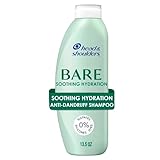
Head & Shoulders BARE Soothing Hydration Anti-Dandruff Shampoo
Best for: Sensitive or dry scalps that react to classic medicated shampoos but still need flake control
1% pyrithione zinc in a 9-ingredient formula free of sulfates, silicones, and dyes
- Same 1% pyrithione zinc active as classic Head & Shoulders, in a 9-ingredient sulfate-free, silicone-free, dye-free formula
- Gentler on dry, sensitive scalps; users report less of the stripped, tight feeling
- Light fragrance and good value at roughly $0.74 per fluid ounce
- Doesn't lather much because it is sulfate-free, which takes some getting used to
- No matching sulfate-free conditioner in the BARE line, and rinse-off conditioner can reduce zinc's effectiveness on the scalp
- Steady rather than dramatic; heavier flaking may need a stronger active
(Affiliate link) · price may vary
The most common complaint about medicated dandruff shampoos is that they leave a sensitive or dry scalp feeling stripped and tight. BARE is Head & Shoulders’ answer to exactly that. It uses the same 1% pyrithione zinc active as the classic formula but in a stripped-back, nine-ingredient recipe that is free of sulfates, silicones, and dyes. People with reactive scalps report it controls flaking without the harsh, squeaky after-feel of standard medicated shampoos, and at around $10 it is reasonable for a gentler formula.
Because it is sulfate-free, it does not lather the way you might expect, which takes some adjusting. And there is no matching sulfate-free conditioner in the BARE line, which matters more than it sounds: rinse-off conditioner over the scalp can wash away some of the zinc before it works, so keep conditioner to your mid-lengths and ends. The effect is steady rather than dramatic, so heavier dandruff may still need a stronger active.
6. True+Real Coal Tar: best budget pick for stubborn flaking
True+Real Coal Tar Therapeutic Plus Anti-Dandruff Shampoo
Best for: Stubborn, persistent flaking and the symptoms of seborrheic dermatitis when the milder actives haven't held them down, at a budget price
0.5% coal tar (2.5% solubilized extract) in a 16 oz bottle shipped and sold by Amazon, at about half a dollar an ounce
- 0.5% coal tar, the heavy-duty OTC active for stubborn flaking and the symptoms of seborrheic dermatitis
- Long-time Neutrogena T/Gel users in the reviews report switching to it with the same results when the original went out of stock
- 16 oz bottle at a budget price with a 4.6-star average across more than 3,600 ratings
- Strong tar smell while it's on the scalp, which owners single out as its main fault; it rinses out
- Coal tar can increase sensitivity to sunlight and can stain light or gray hair
- Fragranced, and the Amazon listing and the DailyMed drug label name different preservatives (DMDM hydantoin vs methylisothiazolinone), so check the bottle if you react to either; a couple of T/Gel veterans found it thinner or less effective for them
(Affiliate link) · price may vary
Coal tar is the heavy artillery of dandruff actives, the one people turn to for persistent, seborrheic-dermatitis-grade flaking that the milder options cannot hold down. The catch has always been that the name-brand coal-tar shampoo is pricey for what it is, and lately hard to find at all. The long-standing benchmark is Neutrogena T/Gel, which has been in and out of stock since we first sourced this guide, and the Amazon Basics bottle that held this slot until October 2026 then went the same way. True+Real’s version, shipped and sold by Amazon itself, takes over on the same terms: 0.5% coal tar (as a 2.5% solubilized extract) in a 16-ounce bottle for around $8. Several of its reviews come from long-time T/Gel users who switched when the original disappeared and say it works the same for them, alongside a couple who found it thinner, or less effective for them, than T/Gel, which is worth knowing if the original worked for you.
The downsides are real and worth taking seriously. It smells strongly of tar while it is on your scalp, which owners single out as its main fault, although it rinses out. More importantly, coal tar can increase your scalp’s sensitivity to sunlight, so the AAD specifically advises sun protection when you use it, and it can stain light or gray hair. The formula is fragranced, and the preservative depends on which label you get: the Amazon listing names DMDM hydantoin, a formaldehyde releaser, while the drug label on the government’s DailyMed database names methylisothiazolinone, so if you have reacted to either before, check the ingredient list on the bottle that arrives. This is a targeted tool for stubborn cases, not a daily shampoo, and if you are reaching for coal tar and still not getting relief, that is the point to see a dermatologist.
How to use a dandruff shampoo (and how often)
Frequency is where most people go wrong, so this section is worth slowing down on. Dandruff is a chronic, manageable condition, not something you cure once and forget. The goal is control, and that means using the shampoo on a schedule and sticking with it.
A few rules that come straight from dermatology guidance and the product labels:
- Match the frequency to your hair. The AAD suggests that if you have fine or oily hair you may wash often and use the dandruff shampoo about twice a week, while coarse, curly, or coily hair can be washed less and use the dandruff shampoo roughly once a week, if your scalp tolerates it.
- Give the active contact time. Massage it into the scalp and leave it for up to 5 to 10 minutes before rinsing. A quick lather-and-rinse does not give the active time to work.
- Respect the eight-week mark on ketoconazole. Nizoral’s own label calls for use every three to four days for up to eight weeks, then as needed. If you still need it constantly after that, that is a signal to see a dermatologist rather than to use it more.
- Condition after, but not on the scalp. Medicated actives are drying, so follow with a deep conditioner on the lengths. Keep rinse-off conditioner off the scalp, especially with ketoconazole and zinc, where it can reduce how well the active works.
- Rotate if one stops working. If an active loses its grip over time, switch to a shampoo with a different active instead of buying more of the same. Many people keep two on hand and alternate.
- Give it a few weeks before you judge it. Dandruff actives work gradually, and the most common mistake is quitting too early. Selsun Blue’s own guidance is a useful benchmark: if you see no improvement after about four to six weeks of consistent use, switch to a different active rather than abandoning treatment.
- Pregnant, breastfeeding, or treating a child? These are all over-the-counter drugs, and some carry extra cautions (coal tar and selenium sulfide in particular). Read the Drug Facts panel and check with a doctor or pediatrician before use.
If your symptoms do not improve after several weeks of consistent use, or the scalp is inflamed, painful, or spreading, that is the line where a board-certified dermatologist should take over.
A note on color-treated and curly hair
Color-treated hair is the most common worry we saw, and it is legitimate: several users reported that classic Head & Shoulders pulled their toner or fade their color faster. The good news is that the gentlest-on-color picks here are also effective. Nizoral and Head & Shoulders Classic Clean are both labeled color-safe, and the sulfate-free, dye-free BARE formula is gentle on color too, while selenium sulfide and coal tar are the two to be careful with, since both can discolor light or gray hair. Curly and coily hair has the opposite scheduling problem: because you wash less often, lean toward the once-a-week guidance and follow every medicated wash with a rich conditioner to offset the dryness. We are keeping a dedicated curly-hair and color-safe dandruff breakdown for a future guide; for now, the labels above are your safest shortcut.
What we’d skip (and why)
“Natural” products sold as a standalone dandruff fix. Tea tree, apple cider vinegar, and scalp scrubs are cosmetics, not OTC drugs. They can soothe a dry, flaky scalp, and some people like them as a maintenance step, but a cosmetic cannot do what a monograph active does for real dandruff. Use them alongside a medicated shampoo, not instead of one.
A dandruff shampoo that also markets itself for thinning or hair loss. Dandruff actives control flaking and itch. A shampoo that claims to bring hair back or reverse thinning is making a drug claim its ingredients do not support, and the two concerns are unrelated. Stick to the flaking picks here and keep any hair-loss promises at arm’s length.
Self-treating scalp psoriasis as if it were dandruff. Some of these actives (salicylic acid, coal tar) appear in psoriasis products too, but psoriasis is a distinct medical condition. If your patches are thick, silvery, and well-defined, see a dermatologist for a real diagnosis rather than guessing with a dandruff shampoo.