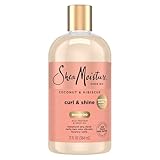


Our top pick is the SheaMoisture Coconut & Hibiscus Curl & Shine Shampoo. It cleans type-3 curls gently without stripping them, it is sulfate- and silicone-free, and it costs about the price of a sandwich. If your hair is finer, coarser, or drier than that, or you want to spend even less, one of the other four below fits you better.
This page is about the shampoo half of a curly routine: the wash that cleans your scalp without leaving your curls dry and squeaky. It pairs with a good rinse-out conditioner for curly hair, which does the softening and detangling, with an occasional clarifying wash to reset buildup, and with a weekly deep conditioner when the lengths run dry or damaged. Get the shampoo right and the rest of the routine has an easier job. If you are new to all of this, our beginner curly hair routine puts every step in order.
When I read through r/curlyhair, r/Naturalhair, and r/HaircareScience, the same three questions came up far more than any product name: should a curly shampoo be sulfate-free, how often should you actually wash, and why do curls go limp no matter what you buy. So I sorted the picks by who each one suits, answered those three questions against cosmetic chemists and dermatologists rather than bottle marketing, and every downside below is one buyers raise themselves. One honest note first. A shampoo cleans; it does not define your curls or change your curl pattern. The definition comes from the conditioner, leave-in, and gel you use afterward.
| Product | Price | Size | Format | Sulfate Free | Silicone Free | Rating | Buy |
|---|---|---|---|---|---|---|---|
| SheaMoisture Coconut & Hibiscus Curl & Shine Shampoo Our pick | $ Budget | 13 fl oz | shampoo | Yes | Yes | 4.5 (22,751 reviews) | Check price (Affiliate link) |
| Garnier Fructis Curl Nourish Moisturizing Shampoo | $ Budget | 12.5 fl oz | shampoo | Yes | — | 4.6 (6,931 reviews) | Check price (Affiliate link) |
| Mielle Organics Pomegranate & Honey Moisturizing & Detangling Shampoo | $ Budget | 12 fl oz | shampoo | Yes | — | 4.5 (5,106 reviews) | Check price (Affiliate link) |
| L'Oreal Paris EverPure Sulfate-Free Shampoo for Curly Hair | $ Budget | 8.5 fl oz | shampoo | Yes | — | 4.6 (2,085 reviews) | Check price (Affiliate link) |
| Redken All Soft Mega Curls Shampoo | $$ Mid | 10.1 fl oz | shampoo | Yes | — | 4.6 (1,518 reviews) | Check price (Affiliate link) |
Swipe the table to compare specs and ratings. The Buy column stays pinned.
1. SheaMoisture Coconut & Hibiscus: our top pick
SheaMoisture Coconut & Hibiscus Curl & Shine Shampoo
Best for: Medium-to-thick type-3 curls that want a gentle, sulfate-free cleanse without stripping
A sulfate- and silicone-free coconut-oil, silk-protein and neem-oil shampoo that cleans curls without the squeaky-stripped feel, pairing with the matching Curl & Shine conditioner
- One of the deepest review bases in the category, widely stocked and inexpensive
- Sulfate- and silicone-free, so it fits a curly-girl routine without buildup from the shampoo itself
- Cleans gently without the stripped, squeaky feel that leaves curls dry
- Low-porosity or fine hair can find the coconut-oil-and-shea richness heavy or prone to buildup, so it rewards medium-to-high porosity more
- A long-running curl-community grumble holds that an earlier reformulation changed the feel from the original
(Affiliate link) · price may vary
This is the one we would reach for first if you have medium-to-thick type-3 curls and want a gentle, sulfate-free clean without a stripped feel. It is a drugstore staple with one of the deepest review bases in the whole category, more than 22,000 ratings at 4.5 stars, and a bottle costs about $10.
Why we recommend it
Curly hair is drier than straight hair because the twist in each strand makes it harder for scalp oil to travel down, so a curly shampoo needs to clean the scalp without stripping the lengths. This one does that. The coconut-oil, silk-protein, and neem-oil formula cleans gently and leaves curls soft rather than squeaky. It is also sulfate- and silicone-free, so the shampoo itself does not add the buildup that flattens curls. On r/curlyhair it is one of the names that comes up again and again as the affordable pick people keep circling back to, and it pairs with the matching Curl & Shine conditioner for a full drugstore routine.
Who it’s best for
Best if you have type-2 to type-3 curls of medium-to-high porosity and want a dependable, inexpensive everyday shampoo. If your hair is very fine, or tightly coiled and thirsty, a lighter or richer pick below suits you more.
Potential downsides
- If your hair is low-porosity (water beads on it and takes a while to soak in) or fine, the coconut-oil-and-shea richness can sit heavy or build up. It rewards medium-to-high porosity more.
- There is a long-running community grumble that an earlier version of the formula felt different, and some long-time users say the current one is not quite what it was.
SheaMoisture · (Affiliate link)
2. Garnier Fructis Curl Nourish: the budget pick
Garnier Fructis Curl Nourish Moisturizing Shampoo
Best for: Anyone who wants a sulfate-free curl cleanse for the lowest price, across curl types 2-4
A sulfate-free, vegan shampoo built on plant protein and coconut oil that cleanses curls gently at the cheapest price per use in this lineup
- The cheapest per use here, and widely stocked in drugstores
- Sulfate-free and vegan, with a plant-protein and coconut-oil formula curly users rate as a reliable everyday cleanse
- Gentle enough for frequent washing on looser, faster-greasing curls
- A lighter, budget formula, so very dry or tightly coiled hair that needs heavy moisture will lean harder on its conditioner to make up the difference
- Fragranced, and a budget drugstore formula: a great-value clean, not a luxe experience
(Affiliate link) · price may vary
At frequently under $6 for a big bottle, the Garnier Fructis Curl Nourish shampoo is the cheapest per use here and a genuinely capable sulfate-free cleanse. It is a vegan formula built on plant protein and coconut oil, aimed at all curl types, and it is the pick we would hand someone who wants to clean their curls gently without spending much.
Why we recommend it
Not every curly shampoo needs to be expensive to be gentle. This one is sulfate-free and vegan, cleans without stripping, and is stocked in nearly every drugstore. On Reddit it comes up as a reliable everyday cleanse rather than a cult favorite, which is exactly what a budget pick should be: it does the job and gets out of the way so your conditioner and styling products can do theirs.
Who it’s best for
Reach for this if you want a no-fuss, sulfate-free clean at the lowest price, whatever your curl type. It is gentle enough to wash with often, holds up across curl types from loose waves to tight coils, and it is an easy first step for anyone new to curly hair who does not want to commit much money yet.
Potential downsides
Two honest limits. It is a lighter, budget formula, so very dry or tightly coiled hair that needs heavy moisture will lean harder on its conditioner to make up the difference. And it is a fragranced drugstore formula that cleans rather than styles: a great-value wash, not a luxe one.
Garnier · (Affiliate link)
3. Mielle Pomegranate & Honey: best for thick, coily hair
Mielle Organics Pomegranate & Honey Moisturizing & Detangling Shampoo
Best for: Thick, coarse and coily type-4 hair that needs heavy moisture and slip on wash day
A sulfate-free honey and babassu-oil shampoo built for type-4 coils that cleanses while pre-detangling dense, thirsty hair
- Sulfate-free moisture built specifically for thick, coily type-4 hair
- Honey and babassu oil add slip that helps pre-detangle dense hair on wash day
- Strong 4.5-star review profile across more than 5,000 ratings
- The rich, honey-and-babassu formula is built for thick, coily hair, so it is too heavy for fine or wavy textures
- Fragranced with essential oils that some sensitive scalps prefer to avoid, so patch-test if yours reacts easily
(Affiliate link) · price may vary
Most drugstore curl shampoos are built for looser curls, which is exactly why thick type-4 coils get left dry by them. The Mielle Pomegranate & Honey shampoo is the answer on formula: a sulfate-free, honey-and-babassu-oil cleanser made specifically for coily, tightly curled type-4 hair that needs heavy moisture and slip on wash day. It holds a 4.5-star average across more than 5,000 ratings.
Who it’s best for
Best if you have thick, coarse, or coily type-4 hair that most shampoos leave feeling stripped. The babassu oil adds enough slip to help pre-detangle dense hair while you wash, which is where a lot of coily breakage happens.
Potential downsides
The same richness that suits coily hair makes it too heavy for fine or wavy textures, so this is a type-4 pick, not an all-textures one. It is also fragranced with essential oils that some sensitive scalps prefer to avoid, so patch-test if yours reacts easily. Mielle as a brand has drawn some online criticism, though most of the scalp-irritation reports we saw were about a separate product, its rosemary-mint scalp oil, rather than this shampoo.
Mielle Organics · (Affiliate link)
4. L’Oreal EverPure: best for fine and wavy hair

L'Oreal Paris EverPure Sulfate-Free Shampoo for Curly Hair
Best for: Fine and loosely wavy 2A-3A hair that goes limp under richer curl shampoos, including color-treated curls that need a gentle wash
A lightweight, sulfate-free coconut-oil shampoo that cleanses fine waves and curls without weighing them down
- Lightweight sulfate-free cleanse that will not flatten fine or wavy curls
- Strong 4.6-star average across more than 2,000 ratings
- Vegan, dye-free, color-safe EverPure formula that suits color-treated curls
- The same lightness that suits fine and wavy hair under-moisturizes thick or tightly coiled type-4
- One of the smaller bottles here at 8.5 oz, so its price per ounce runs higher than the big drugstore jugs
(Affiliate link) · price may vary
Fine and loosely wavy hair gets flattened by rich curl shampoos, which is why the lightest formula here earns its own slot. The L’Oreal EverPure sulfate-free shampoo is a lightweight, coconut-oil cleanse built to clean fine waves and curls without weighing them down. EverPure is L’Oreal’s color-safe line, so it doubles as a gentle, dye-preserving wash for color-treated curls. It carries a 4.6-star average across more than 2,000 ratings, and it is vegan and dye-free.
Who it’s best for
Reach for this if your 2a-to-3a waves or fine curls go limp and greasy under richer bottles. It is the pick that cleans without the coating that makes fine hair fall flat.
Potential downsides
The same lightness is its limit. By formula it will under-moisturize thick or tightly coiled type-4 hair that needs a richer wash, so it is a fine-and-wavy pick, not an all-textures one. It also comes in a smaller 8.5-ounce bottle, so its price per ounce runs higher than the big drugstore jugs above it.
L'Oreal Paris · (Affiliate link)
5. Redken All Soft Mega Curls: the premium pick

Redken All Soft Mega Curls Shampoo
Best for: Severely dry, coarse or tightly coiled curls that the drugstore picks leave wanting
A sulfate-free salon shampoo with aloe vera and inca inchi oil built to soften severely dry, coarse curls, pairing with the same-line All Soft Mega Curls conditioner
- Salon-grade slip and richness for severely dry, coarse or coily curls
- Sulfate-free, and pairs with the matching All Soft Mega Curls conditioner
- Holds a 4.6-star average across more than 1,500 ratings
- By far the priciest pick here, and the aloe-and-oil richness that rescues severely dry curls will weigh down fine or wavy hair
- A few long-term users find the results plateau, so treat it as a targeted pick rather than a default upgrade
(Affiliate link) · price may vary
If your hair is severely dry, coarse, or tightly coiled and the drugstore picks leave it wanting, this is the splurge. The Redken All Soft Mega Curls shampoo is a salon formula with aloe vera and inca inchi oil aimed at extremely dry curls and coils, with the slip and richness to soften hair that lighter bottles cannot. At roughly $29 it is by far the most expensive pick here, and it holds a 4.6-star average across more than 1,500 ratings. It also pairs with the same-line All Soft Mega Curls conditioner.
Who it’s best for
Best for genuinely dry, coarse, or coily curls that stay thirsty on the cheaper formulas. If that is your hair, the richer cleanse is worth it.
Potential downsides
The price is the obvious catch, and the richness is the subtler one. The aloe-and-oil formula that rescues severely dry curls will weigh down fine or wavy hair, and a few long-term users find the results plateau. Treat it as a targeted pick for genuinely dry, coarse, or coily hair rather than a default upgrade.
Redken · (Affiliate link)
Do you even need a curly-hair shampoo?
Sort of. A shampoo marketed for curls is really just a gentler, more moisturizing cleanser, usually sulfate-free, and that gentleness genuinely helps dry curly hair. But the label will not define your curls on its own.
Curly hair is drier than straight hair by design, because the bends in each strand slow the scalp’s natural oils from coating the length. That is why a harsh cleanser leaves curls feeling like straw. A curl shampoo’s whole job is to clean the scalp and lift dirt and old product without stripping that hard-won moisture. What it will not do is define or de-frizz your hair. Experienced users on r/HaircareScience make this point often: a shampoo cleans, and the definition comes from the conditioner, leave-in, and gel that follow. Buy the shampoo to clean well, and let the rest of the routine shape the curl.
Sulfate-free or not? The main curly-hair shampoo decision
Most curly hair does better with a sulfate-free shampoo, because sulfates clean aggressively and strip already-dry curls. All five picks here are sulfate-free for that reason. The one real exception is a flaky or irritated scalp, which can need a different approach.
Sulfates are the strong detergents that make a shampoo lather hard and squeaky. On curly hair the trouble is how hard they clean: they tend to over-clean, leaving it dry and frizzy, which is why the whole curl community leans sulfate-free. It matters even more if your curls are color-treated, because sulfates strip color along with moisture, which is why a color-safe line like the L’Oreal EverPure here suits dyed curls. If you are switching over from a regular sulfate shampoo, give it a couple of weeks, because hair can feel greasier or just different for a wash or two while you get used to a gentler clean, and that usually passes. Here is the honest caveat the marketing skips: sulfate-free is not right for everyone. Several people on Reddit with a flaky, itchy scalp found that going sulfate-free made the flaking worse, not better. The lesson they drew is that not every flaky scalp is a dry one. The American Academy of Dermatology explains that seborrheic dermatitis, one skin condition that can cause an itchy, flaky scalp, is linked to yeast on the skin and is managed with medicated dandruff shampoos and other treatments a dermatologist chooses. If your scalp flakes and itches no matter what you use, that is a sign to see a dermatologist rather than to keep switching curl shampoos.
How often should you wash curly hair, and where does co-washing fit?
Less often than straight hair. Most curly people shampoo somewhere between twice a week and once a week, and many co-wash (clean with conditioner) in between to add moisture without stripping. But co-washing alone is not a full replacement for shampoo.
Because curls are drier, washing daily strips them, so the community norm is to shampoo less and stretch the days between washes. The American Academy of Dermatology notes that people with dry or textured hair generally benefit from washing less often and always following with conditioner. Co-washing fills the gap: it rinses and re-moisturizes without a full detergent wash. The honest limit, and one experienced users on r/curlyhair repeat, is that co-washing does not remove silicone or scalp buildup, so relying on it alone eventually leaves hair coated and heavy. Keep a real shampoo in the rotation, and if you lean on a co-wash, pick one with a mild cleansing agent rather than a plain conditioner.
How should you actually wash curly hair?
Focus the shampoo on your scalp, not the lengths. Work a small amount into the scalp with your fingertips to lift oil and buildup, then let the lather rinse down the strands as you wash it out. Scrubbing the curls themselves roughens the hair and causes frizz.
The scalp is where oil and old product actually collect, so that is what a shampoo needs to clean. The mid-lengths and ends are the oldest, driest part of your hair, and the runoff cleans them enough. Massage the shampoo in with the pads of your fingers rather than your nails, keep it gentle, and follow with conditioner from the mid-lengths down. This scalp-first habit is the single change that most improves how a wash treats curly hair, and it makes even a basic shampoo work better.
Match the shampoo to your curl type and porosity
The best predictor of whether a shampoo suits you is your curl type together with your porosity, which is how easily your hair takes in and holds moisture. Lighter formulas suit fine and wavy hair; richer ones suit coarse and coily hair.
Curl type sets the broad need. Looser type-2 waves and fine curls get flattened by heavy formulas, so they want a lightweight shampoo like the L’Oreal EverPure. Type-3 curls sit in the middle and suit balanced picks like the SheaMoisture or Garnier. Tightly coiled type-4 hair is usually the thirstiest and rewards a rich, moisturizing cleanser like the Mielle or the Redken. Porosity is the second half of the fit, with one warning on how you measure it: do not bother with the floating-strand test in a glass of water. Cosmetic chemist Michelle Wong has shown those at-home porosity tests do not work, because they read surface damage instead of real porosity. Judge by results instead: if a shampoo the reviews rave about leaves your curls flat and coated, it is too rich for your hair, and a lighter pick will clean better. The same read decides your conditioner, so it pays to choose the wash-day pair together. If you want the full picture, our hair porosity guide covers low versus high, why the float test misleads, and how to read yours by behavior.
Buildup and clarifying: the other shampoo you need
Sulfate-free shampoos are gentle, but that gentleness has a cost: they cannot fully remove silicones or mineral deposits. Buildup from those is the single most common reason curls go limp and dull, so most curly routines need an occasional clarifying wash on top of the daily one.
The most common complaint we read was not about any one shampoo. It was limp, weighed-down curls that no product seemed to fix. The usual culprit is buildup: leftover silicone from styling products or conditioners, plus minerals from hard water, that a gentle sulfate-free shampoo cannot strip. Cosmetic chemist Michelle Wong’s silicone mythbusting makes the practical point: silicones are not the villain they are often called, but if you use them you need a wash that removes them periodically. The fix is to keep a clarifying or chelating shampoo in rotation every week or two, and to reach for it when your curls stop responding. It resets the buildup that the daily curl shampoo is too gentle to touch.
Do you need to spend more?
For most curly hair, no. Four of our five picks cost about $6 to $13, and they are here on merit, not as filler. The most expensive bottle is rarely the best one for you.
This is the budget lesson the curly community keeps landing on: how well a shampoo cleans your curls has little to do with what it costs, and the drugstore bottles here clean as well as anything pricier. The premium Redken slot is the one exception, and only for genuinely dry, coarse, or coily hair the cheaper formulas cannot satisfy. For everyone else, the smarter spend is a modest shampoo plus a better leave-in or conditioner, because that is where most of a curl’s softness and definition actually come from. Pick the wash for your hair, not for its price tag. Want to know how we choose? See about The Hair Roundup, or browse the rest of our hair-care roundups.