You cannot restore a damaged hair strand to how it was. You can stop adding damage, make what is left smoother and easier to handle, and cut away what is past saving. The priorities, roughly in order: stop the cause, cut, condition, add one treatment, protect the ends, then trim while it grows out.
We screened 324 Reddit threads from damaged-hair searches, 242 of them about damage or repair, and read 12 in full, mostly across r/HaircareScience, r/Haircare, r/femalehairadvice, r/FancyFollicles, r/Naturalhair, r/longhair and r/finehair; the archive search was patchy, so treat the counts as a sample. The top answer on one r/HaircareScience thread (127 points) set the tone: “No, you can’t fix it, but you can unnaturally hold it together with olaplex 3 and apogee 2 step protein treatment until it gets long enough for you to feel comfortable cutting it off”.
“Repair” is the word on the bottles, and it needs defining. The hair you see is not living tissue, so it cannot heal the way skin does. Some products do change a damaged strand for a while: they can smooth the surface, and a few have raised measured strength in lab tests. None has been shown to put back what bleach or heat removed. A dermatology-journal review puts it in chemistry terms: keratin is “an irreplaceable protein”, and “the using of aminoacids do not replace or restore the damaged molecule structure.” The cosmetic chemists at The Beauty Brains are blunter: “Although, hair is made of protein, it’s dead.” An r/Haircare commenter (50 points) found the image: “You can lay it flat again, but the fold will stay.”
First, check that it is damage
Some hair that looks damaged is just old, frizzy or weighed down by product, so rule those out first. The tells of real damage: it stretches a long way when wet and does not spring back, it breaks when detangled gently with conditioner in, or splits run well up the strand.
The AAD’s care page for Black hair calls the ends “the oldest and most fragile part of your hair.” An r/HaircareScience commenter (48 points) told one poster: “The last few inches of your hair are just old.” Frizz is the second look-alike; a 206-point reply told another: “From these photos your hair just looks frizzy, but squeaky clean and still healthy.”
The third is a crowded routine. One r/Haircare poster was using several protein products at once, and a commenter (29 points) suggested simplifying, spelling and all: “All the products you are using have protien in them. I would lay off the protien for a bit.” That is one poster’s experience, not a diagnosis, but a routine with fewer products is the cheapest test there is.
Our guide to dry, damaged or just frizzy hair covers that triage. If more hair than usual is coming away at the root rather than snapping along its length, that is a question for a doctor.
What repair can and cannot do, by kind of damage
Products can coat, smooth and soften hair, and a few ingredients changed a bleached strand in the lab. We found no independent trial on people showing a product rebuilds a damaged strand. Feel, shine and the rate of new splits can change; a split fibre, a gummy length or a lost curl pattern cannot. Only a cut removes damage.
| Kind of damage | What it looks and feels like | What can change | What cannot change | Where the products are |
|---|---|---|---|---|
| Heat (flat iron, blow-dry, silk press on curls) | Dull, rough, straw-like ends; on curls, sections that stay straight when wet | Smoother feel and shine; fewer new breaks once heat drops | Heat-split ends; a curl pattern lost to heat | Heat protectants |
| Bleach and colour | Dry, porous, tangly hair; at worst gummy or spongey when wet | Slip and softness; a treatment may firm it up for a while | Gummy sections; protein lost from inside the strand | Bond builders |
| Chemical straightening and relaxers | Weak, limp lengths; dry or brittle where processing repeated | Feel and manageability | The straightening itself, which is permanent | Hair masks |
| Mechanical friction | Frayed or split ends, short snapped pieces | Fewer new breaks with gentler handling | Ends that have already split or snapped | Our breakage guide |
| Sun and chlorine | Faded colour; dry, rough, brittle lengths | Feel, with a rinse and conditioner after swimming | Lost pigment (a colour service can deposit new, not reverse the damage); protein already broken down | Shampoo for damaged hair |
Bleach can damage both the cuticle and the cortex. A 2018 lab study found that “Peroxide chemical treatments quickly access the cortex, causing untargeted oxidative damage across the fibre”, “particularly the conversion of cystine disulphide bonds to cysteic acid.” Bond builders say they address those bonds.
Heat damage depends on temperature, time, moisture and how often it is repeated, and it can reach well beyond the ends. In a hair-dryer study, “Hair surfaces tended to become more damaged as the temperature increased.” Flat irons “operate at temperatures over 200 °C”, and heat-stressed hair broke more when combed. An r/HaircareScience commenter (130 points) gave the consumer version: “Heat protection products can’t and don’t protect completely from heat, and the damage done by heat is permanent.”
Relaxers are permanent by design: “the effect of hair straightening is permanent.” Friction is the slow one; in combing tests, brushing had the “largest effect” on long breaks. For sun and chlorine, a dermatologist told the AAD in 2021 that “UV damage breaks down the proteins in hair and also changes its color” and that “chlorine can break down the chemical bonds of the protein in our hair, which leads to even more breakage.”
The order of priorities
Six priorities, roughly in this order; it is a ranking of what matters, not a strict application sequence. Buying a treatment while the cause continues is the usual way to spend money and see nothing.
- Stop the cause, once the damage check above says it is damage. Heat down or off, a protectant every time, a break from lightening.
- Cut what is past saving. Gummy or split-up sections will not come back.
- Condition each wash. Conditioner cut combing breakage in lab tests; a leave-in helps long, fine, coloured or heat-styled hair.
- Introduce one treatment, matched to the damage. A bond builder for bleached or lightened hair; a cautious protein trial for hair that has lost structure. One new product at a time, on its label directions, judged over several weeks on how it detangles and how much breaks.
- Protect the ends. A drop or two of oil cuts friction and softens ends. It does not mend them.
- Trim every few months while it grows out. The whole grow-out takes months, sometimes longer, depending on how much length is damaged.
Stop the cause
The AAD’s line is “Use low or medium heat settings and a product to protect your hair from the heat.” The top reply on an r/HaircareScience straightener thread (111 points): “Stop skipping the heat protectant! You should be using it anytime you use heat on you hair.” If you lighten, pause; an r/FancyFollicles commenter (25 points) told someone whose salon bleach went wrong that there would be no lightener for them in the near future. For ties, brushing, towels and sleep, see our guide to preventing breakage.
If you keep heat-styling, CHI 44 Iron Guard is the overall pick on our heat protectant page, and an inexpensive one, under $15. CHI rates it to 450°F; that is the brand’s figure, not a safe setting. Follow the label, and let hair dry fully before a flat iron or curling iron touches it. Our damage-focused searches this time turned up no threads on it; the Reddit routines behind the pick, and the evidence on what any protectant can and cannot do, are on the heat protectant page. Its Amazon record is a 4.5-star average across more than 72,000 ratings, possibly pooled across sizes.
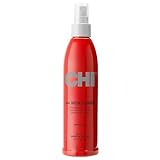
CHI 44 Iron Guard Thermal Protection Spray
Best for: Most people who heat-style regularly and want one inexpensive spray that holds up across fine, wavy, and curly hair before a blow-dry, curl, or flat iron
A thermal spray with hydrolyzed silk and keratin that CHI rates to 450F, which owners with fine and thick hair describe as light on the hair
- Named in blow-dry and silk-press routines by fine-haired and curly Reddit users in our heat-protectant research
- Rated by CHI to 450F, the ceiling most flat irons and curling wands reach; the rating is the brand's, and no protectant prevents heat damage entirely
- One of the most budget-friendly thermal sprays on Amazon, with a review base over 70,000 ratings
- Contains denatured alcohol; follow the label and let hair dry fully before an iron touches it, rather than treating it as an all-day leave-in
- Some buyers find it can feel stiff or sticky and say it is harder to rinse out than lighter sprays
- The scent is noticeable on application, though reviewers say it fades quickly
(Affiliate link) · price may vary
CHI · (Affiliate link)
Cut, then condition
A self-described professional stylist on r/femalehairadvice (379 points) told a poster with seven fried inches: “Unfortunately, no amount of deep conditioning treatments can save your hair at this point”. The lab work agrees that what bleach takes does not come back: “Protein loss through leaching increased with bleaching severity”. A lower-scored r/FancyFollicles reply gives the practical rule: “Cut off anything that’s stretchy or gummy.” Use sharp hair-cutting scissors; how much to take is in the cut-or-keep section below.
Conditioning has direct lab support: “chemical bleaching increased both short and long segment breakage while a commercial hair conditioner decreased both types of breakage.” A dermatologist quoted by the AAD adds that for hair “that’s long, fine, color-treated, permed, or styled with heat, using a rinse-off conditioner (one you apply in the shower) may not be enough”, which is where a leave-in comes in. The top comment (424 points) on an r/HaircareScience damage thread: “Try to find a conditioner with amodimethicone high on the ingredients list.” Fine hair can get weighed down by a conditioner, a leave-in, an oil and a treatment stacked together: keep oil to the last inch or two, pick a light leave-in, and space treatments further apart. If you use silicones or protein regularly and hair starts to feel coated, a clarifying wash now and then clears the residue; it is not a fix for dryness. For the wash, see our shampoo for damaged hair picks; for the conditioner, our conditioner for dry hair picks.
Protect the ends
Oil is for feel and friction. A commenter on the r/AustralianMakeup thread Google ranks for this search put it simply: “Oils are great for softness and reducing friction, but they don’t actually repair damaged hair either.” The review agrees: oil films “can mask the lifted scales of the cuticle”, and silicone polymers “may re-cement lifted cuticle scales and prevent damage from heat.”
Any light silicone serum does this job. Olaplex No.7 Bonding Oil is the one we carded because fine-haired owners so often call it the lightest they have found, at two or three drops a use, and it came up in 9 of the relevant threads. It is a mid-range price per bottle and a high one per ounce. Use it for the finishing benefits; one r/HaircareScience commenter (14 points) doubts how much of the brand’s bonding ingredient it carries, and nothing we read shows a bond-repair benefit from it. Olaplex also calls it a heat protectant; we did not assess that claim. Its record is a 4.7-star average across more than 63,000 Amazon ratings, possibly pooled across sizes.

Olaplex No.7 Bonding Oil
Best for: The finishing oil fine-haired owners most often call the lightest they have found, for damp or dry hair
Olaplex calls it a bonding oil; in practice it is a silicone-led finishing oil used at 2-3 drops a use for shine, smoothing and frizz control
- Frequently named the lightest oil owners have found for fine or easily-weighed-down hair, next to heavier salon serums
- A little goes far: 2-3 drops per use means a small bottle lasts many owners a year or more
- Doubles as a pre-heat-styling smoother and a post-styling shine finisher on damp or dry hair
- Olaplex markets it as a heat protectant, but at least one owner who likes the oil says not to rely on it as your sole heat protectant
- Price per ounce is high for the bottle size, offset only by how little product each use takes
- Not everyone finds it does much: a couple of owners call it fine but unremarkable and stick with other oils
(Affiliate link) · price may vary
Olaplex · (Affiliate link)
Why one cut did not fix it
The possible reasons: too little came off, the scissors were dull, the damage runs higher than the ends, or the cause never stopped. A flat iron can damage any part of the strand it touches, so a trim can reveal damage that was already there. Heat-damaged curls are cut off as new curls grow in.
“I keep cutting my hair to fix it but it seems to be just getting worse”, wrote an r/Haircare poster in a 1,211-point thread about hair bleached years earlier. The top reply (686 points) asked: “Are you using proper scissors?” Another (115 points) guessed at a different cause: “Cause the damage has reached the whole strand to the top, I’m guessing that if you cut it, it will still split.” On an r/HaircareScience straightener thread, a low-scored reply made the heat version of the same point: “flat ironing damages the whole shaft that you touch so eventually you’re just trimming to reveal already damaged hair”.
A 1984 lab study found that “Above 140 degrees C the structural modifications were profound and irreversible.” That is a 1984 lab figure, not a dial setting, and no source we found gives a safe home number.
Curls after a silk press are their own case. On an r/Naturalhair post headed, in part, “I got ONE silk press and she damaged my WHOLE head”, the top reply (101 points) said: “There’s just not amount of protein treatments or products that will return it to its natural state.” Its two routes: “You’re better off just growing your hair out and doing a big chop or if big chop is too much, do trims every 6 weeks.”
Split ends: no permanent fix, only scissors
You cannot permanently seal a split end. Some ingredients bind splits shut until your next shampoo. The lasting fix is to cut them; a split can keep splitting, though how fast, and whether every split does, is not something any source we found has measured.
A lab paper from an ingredient maker is plain: “Although there are no conventional systems that will permanently mend split ends, a semi-permanent mending composition has been achieved through a polyelectrolyte complex.” Even that one “rinses off with shampoo”. On split-end sealing serums, one r/Haircare commenter’s advice: “If you’re going to buy it, buy it for the heat protection aspect.” An r/HaircareScience commenter (40 points): “Split ends need to be cut there’s no repairing them”. Posters say splits “travel up” the strand (“Don’t wait until it’s grown out to cut, damage can continue to travel up the hair”, r/femalehairadvice, 112 points); treat the speed and the inevitability as belief.
Between haircuts, an r/Haircare commenter (29 points) described the twist-and-snip method often called dusting: “I section my hair in small parts, twist the entire strand semi tight, run my fingers up the strand making the flyaways/split ends show, then cut off the visible split ends I see with hair shears.” Cut only the fibres you can see are split; shorter hairs sticking out of a twist are often intact new growth or layers.
Bleach-fried and gummy hair
If bleached hair stretches like gum, stays stretched, or turns spongey when wet, the inside of the strand is damaged and that section needs cutting. No treatment brings it back, and waiting does not help. Pause lightening while it grows out.
An r/FancyFollicles poster described it exactly: “the ends are crazy spongey and holding too much water”. A self-described hairdresser on r/HaircareScience (54 points): “bleach damage doesn’t magically get repaired just by waiting a few weeks.” A 2019 study called bleaching and dyeing “very aggressive to hair structure.” The AAD advises you “Choose a dye within three shades of your natural color”, since going lighter than that “requires higher volumes of peroxide, which causes more hair damage.”
If you want colour back without lightening, ask a colourist to assess the hair and strand-test a pigment-depositing option; a non-oxidative colour is a different chemistry from bleach, and badly compromised hair may not take further processing well. One r/FancyFollicles recovery log, an 8-out-of-10 review of a bond treatment, kept coming back to the same condition: “10/10 avoiding heat (sigh).” and “The heat obliterates any progress I make through other treatments”.
For relaxed hair we found no independent evidence on bond builders or protein, and the lab work the brands cite used bleached hair. The AAD’s advice is about preventing more damage: touch-ups “should only be done every two to three months and only to newly grown hair”, and “Never apply relaxer to hair that has already been relaxed.”
Bond builders and protein: who they help, and a stop rule
Bond builders are for bleached or lightened hair, and the lab work outside the brands is small and mixed. Protein can firm up hair that has lost structure for a while, by many users’ accounts. Neither has been shown to rebuild hair on people. Introduce one at a time and stop if hair turns stiffer or more tangly.
Olaplex says No.3PLUS “repairs all three types of hair bonds and strengthens both the cortex and the cuticle.” K18 says its peptide “repairs hair at a molecular level across multiple types of bonds”. Those are the brands’ claims. The lab work not run by the brands used different products and different endpoints, so it neither confirms nor refutes the 3PLUS claim directly. A University of Bologna study of maleate-based repair agents on bleached hair found “None of the investigated treatments induced an increase in the SS disulfide bridges content of the hair cortex,” though the surface looked smoother. A 2024 study reported that “Olaplex® and K18® led to an increase of 47.6% and 19.5%, respectively, in the tensile strength in relation to Bleached samples”, on three tresses per condition and “in a single application of each product.” It used Olaplex No.0, not 3PLUS. An r/HaircareScience commenter (55 points) flagged it: “The sample size (n=3).” Olaplex and K18 are frequently discussed, partly because our searches targeted them; we are not ranking them. Our Olaplex vs K18 comparison goes head to head.
The forum splits. One poster rated Olaplex far above K18, which left their hair dry; others report the reverse. A 145-point comment warned that on hair that is not damaged, “the amount of conditioning that the line offers is going to be overkill for someone with reasonably healthy hair.” A low-scored reply added: “Olaplex sometimes doesn’t work on hair too far gone”.
Olaplex No. 3PLUS, the brand’s current version of No. 3, is the bond builder we carded, at a mid-range price. It is a three-minute pre-shampoo step. The newer formula has under 2,000 ratings (a 4.5-star average), a young record, and Reddit is split on the original No. 3: people with fine or undamaged hair report dryness or no change. For cheaper options, see our Olaplex alternatives.

Olaplex No. 3PLUS Hair Repair Pre-Shampoo Treatment
Best for: The reference product: anyone who wants the original patented bond-builder rather than an alternative, and will pay for it
Olaplex's update to No. 3: a 3-minute pre-shampoo bond treatment with the brand's patented bond-building molecule plus a damage-defense complex, in a 100 ml bottle
- The original patented bond-building chemistry, the reference product in this category
- A short 3-minute pre-shampoo step, protein-free and color-safe by the brand's claims
- The brand's own current listing, not one of the look-alike third-party 'Ola'plex' listings that sit beside it in Amazon search
- Around ten dollars an ounce on a bottle Amazon reviewers call smaller than expected, and Olaplex says use it every 1 to 3 washes
- This is the newer 3PLUS formula, so its rating record is still young, under 2,000 ratings; long-term reviews do not exist yet
- It does not work for everyone: Reddit threads are split, and people with fine or undamaged hair often report dryness, weight, or no change
(Affiliate link) · price may vary
Olaplex · (Affiliate link)
Protein is harder to call. The threads offer a rule of thumb, limp and over-stretchy hair wants protein, stiff and straw-like hair wants moisture, and there is no study behind it; hair that feels rough can respond to a protein-containing conditioner too, and fried hair often ends up needing both. Use the rule as a prompt for a cautious trial, not a diagnosis. Small proteins do get in: a radiolabelling study found “significant penetration into hair can occur.” Getting in is not rebuilding. “Protein overload” is the forum’s name for hair gone stiff from too much; Healthline calls it “mostly anecdotal as of now.” An r/HaircareScience commenter (92 points) offered another reading: “I read that most protein products just don’t do very good job at conditioning your hair which people then read as protein overload when really it’s just a lack of proper conditioning ingredients”. The forum’s go-to for fried hair is Aphogee’s two-step protein treatment; it has no card here.
Elizavecca CER-100 is our budget protein pick, under $10, a five-minute rinse-out conditioning treatment. It is a protein treatment, not a bond builder, and nothing we read shows it works the way Olaplex is designed to; frequent use can leave fine hair stiff, and the fragrance divides buyers. It has a 4.4-star average across more than 65,000 Amazon ratings, possibly pooled across sizes, but the Reddit signal is thin: 3 relevant threads, the top one at 146 points.
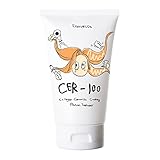
Elizavecca CER-100 Collagen Coating Hair Protein Treatment
Best for: Dry, rough, over-processed hair that wants the instant softness people mean when they call this an Olaplex dupe, at a drugstore price
A 5-minute rinse-out protein and ceramide conditioning treatment from Korea with more than 65,000 Amazon ratings
- More than 65,000 Amazon ratings at 4.4 stars
- Under ten dollars, and a five-minute rinse-out that fits any shower
- Delivers the immediate slip and softness that make people reach for the word dupe
- It is a conditioning protein treatment, not a bond builder, and nothing we read shows it works the way Olaplex is designed to
- Protein-heavy formulas can leave fine or protein-sensitive hair stiff with frequent use; Reddit users who like it keep it to roughly once a week or less
- The fragrance divides Amazon reviewers (one four-star review calls it awful while others buy it for the scent), and some report hair feeling dry afterward
(Affiliate link) · price may vary
Elizavecca · (Affiliate link)
The stop rule: one new treatment at a time. If hair turns stiffer, drier or more tangly after you add one, stop it and go back to a plain wash and condition; clarify only if the hair feels coated. As an r/HaircareScience commenter put it: “The solution to having Too Much Stuff on your hair is to wash it off, not to add More Different Stuff.” Our hair mask guide matches masks to kinds of damage.
Cut or keep? A quick decision
Cut the sections that have lost their structure. Keep and treat hair that is dry and frizzy but intact. If cutting all of it is too much, there is a middle route.
Cut now if:
- it is gummy or spongey when wet, or stretches far and stays stretched
- splits run well up the strand, visible when you twist a section
- it breaks when detangled gently with conditioner in
- on curls, sections stay straight when wet
Keep and treat if:
- it is dry and frizzy but holds together when wet
- no new snapping since you cut back on heat
If cutting it all is too much: cut the worst, hold the rest together with one treatment and gentle handling, and trim every few months as it grows. That is the route the 127-point commenter described, and an r/Naturalhair commenter with damage of their own (3 points) chose: “So im just trimming over time”. For how much, cut above the highest split you find when you twist a section, or above where the gummy feel stops on wet bleached hair; an r/Haircare commenter (7 points) told a poster whose trim failed: “Because you did not cut off enough.” The blunt version, from the same 127-point commenter: “Just cut it off. Cry once instead of for months while you desperately try to fix and it gets worse”.
How long it takes
Conditioner and oil change how hair feels straight away. Fewer new breaks take weeks of gentler handling to notice. The damage itself only leaves with cutting and growing out, which takes months at least, depending on how much length is damaged.
Early wins can fade. The r/FancyFollicles recovery log said of a bond treatment: “it lasts for a few weeks before my hair feel like straw again”, as long as heat stayed off. A low-scored r/HaircareScience reply set a realistic goal: “You won’t fix what is broken, but in my experience a few months of care can make it workable until it grows out enough to be cut.”