


Our top pick is the Redken Acidic Bonding Concentrate Shampoo, the wash the damage-recovery threads reach for by name. But the honest headline comes first: no shampoo rebuilds damaged hair. A wash rinses away in minutes, so its real job is to clean without adding stress and hand the repair work to a treatment step. Buy the wash that protects the work, not the biggest promise on the label.
There is a second thing this page does that most “best shampoo for damaged hair” lists skip. The most-upvoted advice in the damage threads isn’t “buy a stronger repair shampoo.” It’s the opposite: people pile on bonding and protein washes until their hair turns brittle, and the fix is rotation, not more repair. We sorted six shampoos by the damage each one suits, and built the guide around the mistakes real people describe, with every downside left visible.
| Product | Price | Size | Key Ingredients | Sulfates | Color-Safe | Rating | Buy |
|---|---|---|---|---|---|---|---|
| Redken Acidic Bonding Concentrate Shampoo Our pick | $$$ Premium | 10.1 fl oz | Citric acid, Redken bonding care complex | No (sulfate-free) | Yes | 4.5 (17,859 reviews) | Check price (Affiliate link) |
| L'Oréal Paris EverPure Bond Repair Shampoo | $ Budget | 6.8 fl oz | Bond + amino acid complex | No (SLS/SLES-free) | Yes | 4.6 (4,999 reviews) | Check price (Affiliate link) |
| Olaplex No. 4 Bond Maintenance Shampoo | $$$ Premium | 250 mL (8.45 fl oz) | Bis-aminopropyl diglycol dimaleate (Olaplex bond builder), coconut-oil-derived surfactants | No (SLS/SLES-free) | Yes | 4.6 (83,627 reviews) | Check price (Affiliate link) |
| Nexxus Keraphix Shampoo | $$ Mid | 33.8 fl oz | Keratin protein (KRT technology), liquid crystal amino acids | Not stated | Yes | 4.6 (9,855 reviews) | Check price (Affiliate link) |
| L'Oréal Paris Elvive Total Repair 5 Repairing Shampoo (28 oz, 2-pack) | $ Budget | 2 × 28 fl oz | Protein + ceramide (up to 9% Repair Concentrate) | Not stated | Not stated | 4.6 (13,549 reviews) | Check price (Affiliate link) |
| Dove Intensive Repair Shampoo | $ Budget | 28 fl oz | Glutamic Amino Serum, Bio-Protein Care technology | Not stated | Not stated | 4.8 (6,419 reviews) | Check price (Affiliate link) |
Swipe the table to compare specs and ratings. The Buy column stays pinned.
How we picked, and what we did not test
We researched and compared; we did not test. Every pick clears a floor of at least 1,000 Amazon ratings and a 4.0-star average, every “Buy” link is a labeled affiliate redirect, and no product bought its slot. The shallowest review record here is just under 5,000 ratings; the deepest, Olaplex No. 4, carries more than 83,000.
I kept seeing the same arc across r/Haircare and r/HaircareScience: someone fries their hair with bleach or heat, buys the most repair-branded wash on the shelf, uses only that, and six months later asks why their ends are still straw. So the method was to read what those threads consistently get wrong and right, sort the picks by the job each formula is built for, and pin every mechanism claim to a cosmetic-chemistry source or the manufacturer rather than to a Reddit post. Where a pick’s community record is thin and it stands on its Amazon reviews instead, the section says so plainly.
First, is it actually damage? Three look-alikes to rule out
Bleach, color, relaxers, and hot tools cause real structural damage. But three cheaper problems get mistaken for it constantly, and a repair shampoo fixes none of them.
Curls and waves being brushed straight. The single most-upvoted reply in the frizz threads we read was the same diagnosis over and over: not damage, curly or wavy hair being treated as straight. If your “frizz” clumps into a pattern when wet, try a curl-friendly routine before you buy repair products.
Hard-water buildup. Mineral deposits leave hair dull, stiff, and rough in a way that reads as damage. Users in the routine-audit threads repeatedly traced “nothing works” hair to their water, not their products. A chelating wash is the fix; our hard-water shampoo guide covers it.
Mechanical habits. Tight ponytails, sleeping on wet hair, rough brushing, even glasses hinges catching face-framing strands: the breakage threads are full of causes no bottle addresses. The American Academy of Dermatology’s hair-damage guidance is mostly habit changes (lower heat, gentler handling, looser styles) for exactly that reason.
And one blunt truth from the stylists in those threads: hair that is snapping off in pieces needs scissors, not shampoo. A trim removes the damage; nothing in this lineup can. Our guide to repairing damaged hair sets out what can change, what cannot, and the order to do things in.
The overload trap: why more repair often makes it worse
The most common self-inflicted mistake in the damage threads is using a bonding or protein wash as the only shampoo. Repair formulas are concentrated tools. Used every single wash, on hair that may not even need them, they leave hair stiff, brittle, and more prone to snapping, which reads as more damage and triggers buying more repair. Rotation breaks the loop.
The 236-point top comment in one dry-ends thread put it plainly: most people jumping on the bond-builder trend don’t need those products, and the poster’s problem was “overdoing it by ONLY using a bonding shampoo rather than a moisturizing one between uses.” A self-described hairstylist in another thread made the same point about the acidic bonding line specifically: it’s a strong product, and using it daily can backfire, so rotate in a different daily wash. A third, a self-described hairdresser, gave the shorthand rule for overloaded hair: if the front of the bottle says protein or keratin, put it back.
The chemistry supports the caution without the drama. Hydrolyzed proteins are real actives; the hair-cosmetics literature notes that small protein fragments can diffuse into the shaft, especially on damaged hair, which is exactly why they help and exactly why they accumulate with overuse. The community’s protein-versus-moisture rule of thumb (mushy and stretchy wants protein, stiff and snapping wants moisture) is a folk framework rather than a lab test, but it maps well onto rotating a repair wash with a gentler, moisture-leaning one. If your conditioner side needs the same rethink, our dry-hair conditioner guide is the companion read.
So the honest usage pattern for everything below: the repair wash is one of your shampoos, not your shampoo. And since “rotate with something gentler” is useless advice without a name, this page supplies one: the Dove pick (#6) is the one we’d put on the alternate days. That’s an editorial call, not a measured ranking. Dove has no bond-building chemistry, and the skeptic read in its section credits its real work to ordinary conditioning. It still carries a protein pitch, though, and a minority of users report buildup, so if your hair turns stiff or greasy on it, swap the alternate days to a plain moisturizing wash.
Match the shampoo to your damage
Start with what damaged your hair, not with the marketing.
| Your situation | What to look for | Start with |
|---|---|---|
| Bleached or color-treated, wants salon-line care | Acidic bonding wash, sulfate-free | Redken (#1) |
| Same damage, drugstore budget | Bonding wash, sulfate-free | EverPure (#2) |
| Already in the Olaplex system, or committed to it | Bond-maintenance wash | Olaplex No. 4 (#3) |
| Chemically processed hair that responds to protein | Keratin-protein wash, rotated | Nexxus Keraphix (#4) |
| Everyday wear and dryness on a strict budget | Protein-and-ceramide repair wash | Elvive (#5) |
| Breakage-prone from daily heat and brushing | Strengthening wash, low price | Dove (#6) |
Sulfates deserve one honest note before the picks. The hair-cosmetics literature describes conventional anionic sulfate surfactants as strong cleansers that can raise friction and frizz on the hair surface, which is why most bond lines skip them; the same source notes there’s little published analysis showing sulfate-free formulas clean better. Treat sulfate-free as a sensible default for fragile hair, not a purity test. Three picks here are not marketed as sulfate-free, and their sections say so.
1. Redken Acidic Bonding Concentrate: our top pick
Redken Acidic Bonding Concentrate Shampoo
Best for: Highly processed or bleached hair that wants a salon-line bonding shampoo with color-fade protection
Acidic, sulfate-free formula with citric acid and Redken's bonding care complex; a rich lather that needs less product per wash
- Acidic pH concept designed to respect damaged hair's cuticle while it cleanses
- Sulfate-free and vegan, with color-fade protection for salon color
- Concentrated lather means the 10.1-ounce bottle stretches further than its size suggests
- A steep sticker price, and the 10.1-ounce bottle is small for the money
- A professional line widely resold on Amazon by third-party sellers, so packaging and batch consistency can vary
- Some stylists on Reddit caution against using an acidic bonding wash as your only daily shampoo; rotating with a gentler wash is the community norm
(Affiliate link) · price may vary
This is the wash the damage threads recommend to each other by name. When someone posts fried, over-bleached hair and asks what to wash with, naming Redken Acidic Bonding is close to the stock answer, and it kept appearing across our threads as the salon-line default for color and bleach recovery. The formula is sulfate-free and vegan, built around citric acid and Redken’s bonding complex, with color-fade protection that matters if your damage came from the salon in the first place.
Why we recommend it
It occupies the most useful slot in the lineup: a professional-line bonding wash with a deep review record (4.5 stars across more than 17,000 ratings) and a rich lather that stretches the bottle, a point Redken itself leans on. For bleached or highlighted hair that needs its wash step to stop making things worse, this is the one we’d point you to first, and the thread consensus lands in the same place.
The honest caveats
It carries the highest sticker price in this lineup, and 10.1 ounces is small for the money. It also isn’t universally loved: one widely upvoted de-influencing thread opened with the poster naming the acidic bonding treatments among products they despise, a minority position but a real one. And the community’s own stylists caution against making it your only daily wash, since overusing an acidic bonding line can backfire on fragile hair. Rotate it; don’t marry it.
Redken · (Affiliate link)
2. L’Oréal EverPure Bond Repair: best value
L'Oréal Paris EverPure Bond Repair Shampoo
Best for: Color-treated or bleached hair that wants a bond-marketed, sulfate-free wash at a drugstore price
Sulfate-free cleansing with L'Oréal's bond and amino acid complex: the drugstore counterpart to salon bonding shampoos
- Sulfate-free, vegan formula designed for color-treated, bleached, and fragile hair
- One of the cheapest ways to try a bond-style shampoo without committing salon money
- Part of a full Bond Repair line (pre-shampoo, conditioner, serum) if you want to build a matched routine
- The 6.8-ounce bottle is small; regular use empties it quickly (a larger size exists at a better per-ounce rate)
- Pronounced rose-and-sandalwood fragrance that scent-averse buyers may find strong
- Long-term users report it is not hydrating enough on its own; most pair it with a moisturizing conditioner or mask
(Affiliate link) · price may vary
For most readers with chemical damage and a normal budget, this is the pick: the Redken idea at a drugstore price. It’s sulfate-free, vegan, and aimed squarely at color-treated and bleached hair.
The reason we can say “the Redken idea” is the most useful piece of community intelligence on this page. A chemistry-literate commenter in an r/finehair thread about drugstore shampoos pointed out that Redken Acidic Bonding Concentrate, L’Oréal EverPure Bond Repair, and Garnier Hair Filler are built on fundamentally the same citric-acid bonding technology, differing mainly in inactive ingredients like fragrance, since all three sit under the same parent company. We can’t verify the formulas ourselves, but the products’ own positioning is consistent with it, and it explains how a roughly $10 bottle can compete with salon lines. One convert in that thread put it simply: better for them than Pureology, Olaplex, Oribe, and Ouai. A year-long user in the same thread was cooler, calling it solid but not their favorite drugstore wash, with split ends about the same as on anything else. Real product, ordinary results; the price is the argument.
Three things to keep straight. The 6.8-ounce bottle is small and empties fast, though a larger size exists at a better rate. Long-term users say it isn’t hydrating enough alone; the pattern in the threads is pairing it with a moisturizing conditioner or mask, which fits the rotation rule this whole page runs on. And the strong rose-and-sandalwood scent is a matter of taste. Honesty also requires the sibling note: the same commenter called Garnier Hair Filler the most cost-effective of the three related formulas, so if every dollar counts, that’s a legitimate alternative we simply haven’t put through this page’s process.
L'Oréal Paris · (Affiliate link)
3. Olaplex No. 4: best premium
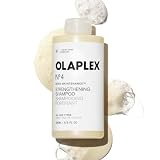
Olaplex No. 4 Bond Maintenance Shampoo
Best for: Color-treated or bleach-damaged hair that wants the Olaplex bond system to continue at the wash step
Concentrated, color-safe cleansing built around Olaplex's bond-maintenance chemistry, with a gentle coconut-derived surfactant blend
- Gentle coconut-oil-derived surfactant blend cleanses without stripping, which is the main job on already-damaged hair
- Concentrated formula: a small amount lathers well, which claws back some of the per-ounce premium
- Color-safe and pairs with the No. 3 treatment most damaged-hair routines already use
- A premium price for an 8.45-ounce bottle, among the highest per-ounce costs in its class
- Olaplex's headline clinical figures apply to the No. 3/4/5 system used together, not this shampoo alone
- Recurring third-party-seller and counterfeit concerns for Olaplex products on Amazon; buy from the Olaplex storefront listing
- Some fine-haired users find it too heavy; sentiment on fine hair is split
(Affiliate link) · price may vary
If you already run Olaplex No. 3 or another bond treatment, No. 4 is the matching wash step, and that’s the case for it: keeping the system coherent rather than mixing philosophies bottle by bottle. Chemist and science writer Michelle Wong has explained how Olaplex’s bond-building chemistry is designed to work, with a caveat that matters here: her read of the No. 4 ingredient list puts the bond active low in the formula, likely too low to carry repair on its own, which is probably why Olaplex brands the shampoo “maintenance.” The wash itself is a gentle, sulfate-free, coconut-derived surfactant base. Its review record is the deepest here by a wide margin: 4.6 stars across more than 83,000 ratings.
The caveats are specific. It’s the priciest per ounce on this page (the Redken bottle, despite its higher sticker, holds more), and Olaplex’s headline clinical numbers describe the No. 3, 4, and 5 system used together, not this bottle alone. Which points at the honest conclusion of Wong’s read: if you aren’t already running the Olaplex treatment system, don’t start your damage routine with this shampoo; start with pick #1 or #2 and put the savings toward an actual treatment. Fine-haired users split on it; some call it a revival, others find it too heavy, so if that’s you, sample before committing. A cosmetologist-framed comment in one thread drew the fit line well: if your hair isn’t chemically or heat compromised, a bonding wash isn’t built for you. And counterfeits are a live, model-specific worry on Amazon, with a whole thread titled around a suspect bottle, so buy from the brand’s storefront listing. If the whole Olaplex price tier is the objection, our Olaplex dupes roundup sorts the cheaper bond-builders by mechanism and cost per ounce.
Olaplex · (Affiliate link)
4. Nexxus Keraphix: the protein route, used deliberately

Nexxus Keraphix Shampoo
Best for: Chemically processed hair (color, bleach, relaxers) that responds well to keratin protein
Keratin-protein formula with liquid crystal amino acids, sold in a 33.8-ounce salon size that undercuts most bond shampoos per wash
- Keratin-protein approach suits chemically processed hair that has stopped responding to moisture alone
- The 33.8-ounce size works out far cheaper per wash than similarly positioned bond shampoos
- Pairs with a matching conditioner and masque for a protein-led routine
- Protein-led formulas can leave protein-sensitive or low-porosity hair feeling stiff or straw-like with frequent use
- Only the large salon size is a good deal; there is no cheap small bottle to trial first
- Not marketed as sulfate-free, unlike most of the bond-shampoo field
(Affiliate link) · price may vary
Keraphix is the lineup’s one dedicated keratin-protein wash, which is exactly what its badge says and all it says: a formula label, not an endorsement. It’s also the pick with the thinnest community record on the page. An exhaustive Reddit sweep turned up only a scattering of small threads rather than a real discussion base, so its basis is a 4.6-star, nearly 10,000-rating Amazon record plus that mechanism fit, and we won’t dress that up as more than it is.
What the scattered threads do say runs both ways, and both match the buyer’s guide. On the good side: a wavy-haired user built a routine they loved around this shampoo at a once-or-twice-a-week cadence, and a fine-haired user said it helped breakage that other bond products hadn’t touched, while warning that overdoing it left their hair heavy. On the cautionary side, the sharpest data point on the page: one user who loved Keraphix at first reported that washing with it every single time for a year and a half left their hair tangly and crunchy, the overload trap told by this exact product. One user comparing the Keraphix conditioner (not this shampoo) with Joico K-PAK found the K-PAK more conditioning, with Keraphix easier to find and cheap.
What earns it the slot: a keratin-protein formula aimed at hair damaged by color, bleach, and relaxers, sold in a 33.8-ounce salon size that works out far cheaper per wash than any bonding shampoo here. Protein-sensitive and low-porosity hair can turn stiff and straw-like on it, so this is the pick that most needs rotating with a gentle moisture wash. It also isn’t marketed as sulfate-free, unlike most of this field, and there’s no small bottle to trial cheaply first.
Nexxus · (Affiliate link)
5. L’Oréal Elvive Total Repair 5: best budget
L'Oréal Paris Elvive Total Repair 5 Repairing Shampoo (28 oz, 2-pack)
Best for: Everyday dryness and general wear-and-tear damage on a strict budget
Protein-and-ceramide formula (up to 9% Repair Concentrate) in two big 28-ounce bottles at a rock-bottom price per wash
- Among the cheapest per-wash options of the widely recommended damage shampoos, sold as two long-lasting 28-ounce bottles
- Protein-plus-ceramide angle targets the five visible signs of wear the line is named for
- Easy to find anywhere, so the routine survives a pharmacy run when the bottle empties
- Not marketed as sulfate-free, which bleach-damaged or very dry hair tends to shop around
- Strong signature fragrance that carries through every wash
- General-purpose repair positioning; no bond-builder chemistry for severe chemical damage, and its protein-forward formula is easy to overdo on protein-sensitive hair
(Affiliate link) · price may vary
Two 28-ounce bottles for about $15 (the single bottle went unavailable on Amazon in October 2026, so the 2-pack is the size we link) keeps it neck and neck with the Dove for the cheapest per wash on the page, and it isn’t a token budget entry. One six-month progress thread we read used Total Repair 5 shampoo and conditioner as the core of the whole routine, twice-weekly washes and all, with results the poster was proud enough to post. The protein-and-ceramide formula targets the five visible signs of wear the line is named for, everyday wear rather than heroic bleach recovery, and that’s the right ambition at this price.
The trade-offs are the ordinary drugstore ones. It isn’t marketed sulfate-free, which very fragile or bleach-damaged hair may want to avoid; the signature fragrance is strong and follows you out of the shower; and it’s a general-purpose repair wash, not a bond product, whose protein-forward formula is easy to overdo if your hair leans protein-sensitive. For everyday dryness and wear on a strict budget, none of that dents the value.
L'Oréal Paris · (Affiliate link)
6. Dove Intensive Repair: the drugstore favorite, eyes open

Dove Intensive Repair Shampoo
Best for: Breakage-prone hair from daily heat and brushing that wants a gentle-priced strengthening wash
Dove's Bio-Protein Care system with Glutamic Amino Serum, aimed squarely at visible breakage
- The highest Amazon rating in its class at the time of our research, on thousands of reviews
- Breakage-focused amino-and-protein formula rather than a generic moisture pitch
- 28-ounce bottle at a drugstore price keeps cost per wash very low
- Dove's headline strength claims are measured against a non-conditioning shampoo, a low comparison bar
- A minority of users report buildup that leaves hair greasy and needs regular clarifying
- Not marketed as sulfate-free, which some damaged-hair routines specifically avoid
- No bond-building chemistry; this is strengthening-and-conditioning care, not a bond product
(Affiliate link) · price may vary
Our read up front: a very good cheap strengthening wash whose marketing outruns its chemistry, and the most argued-about budget shampoo in the damage threads. Both sides deserve airtime. The rave case is real: a 374-point thread titled “Dove intensive repair really is as good as they say” came from a user who had cycled through Redken and other salon lines, and a self-described pro hairstylist of 18 years backed them up in the comments. It carries the highest Amazon rating in this lineup, 4.8 stars across more than 6,000 ratings, at a big-bottle drugstore price, with a formula pitched at visible breakage.
The skeptic case is just as sourced. In an r/HaircareScience ingredient breakdown, the top commenter argued the marquee “Bio-Protein Care” and “Glutamic Amino Serum” marketing is doing nothing in the formula, with the actual smoothing coming from ordinary conditioning polymers and silicones. Dove’s own headline claims are measured against a non-conditioning shampoo, which is a low bar. A minority of users report buildup that leaves hair greasy enough to need regular clarifying, and the ingredient list posted in that same thread shows a conventional sulfate surfactant system. Buy it for what it is. And notice that the skeptical reading is what makes it our choice for the daily partner: if its real work is ordinary conditioning rather than concentrated repair actives, it’s a reasonable wash to use between the stronger picks. Keep an eye on your hair anyway; the protein pitch and the buildup reports are real. That’s the badge: our pick for the rotation shampoo the rest of the page keeps telling you to find.
Dove · (Affiliate link)
How to build the wash routine around the shampoo
The wash step protects the repair work; it doesn’t do the repair. A sensible damaged-hair routine is a repair-leaning shampoo rotated with a gentler wash, a conditioner or deep conditioner doing the moisture work, a dedicated bond or mask treatment on its own schedule if your damage is chemical, and a heat protectant whenever hot tools come out.
Prevention still beats every product on this page. The AAD’s damage-prevention advice is unglamorous on purpose: lower heat, fewer harsh services, looser styles, gentler handling. A shampoo can honor that work or undermine it. It can’t replace it.
Want to know how we choose? See about The Hair Roundup, or browse the rest of our hair-care roundups.